AC/DC 模块

低频电磁和机电元器件的仿真工具

作为 COMSOL Multiphysics® 仿真平台的附加专业模块,“AC/DC 模块”是一款分析静态、低频电磁问题的强大而灵活的工具,提供了丰富的建模功能和数值方法,帮助用户通过求解麦克斯韦方程来深入研究电磁场和 EMI/EMC 问题。
借助于 COMSOL® 软件的多物理场耦合功能,用户还可以进一步研究电磁场与其他如热、结构、声等物理效应之间的相互影响,获得更加准确、贴近实际场景的仿真结果。

联系 COMSOL
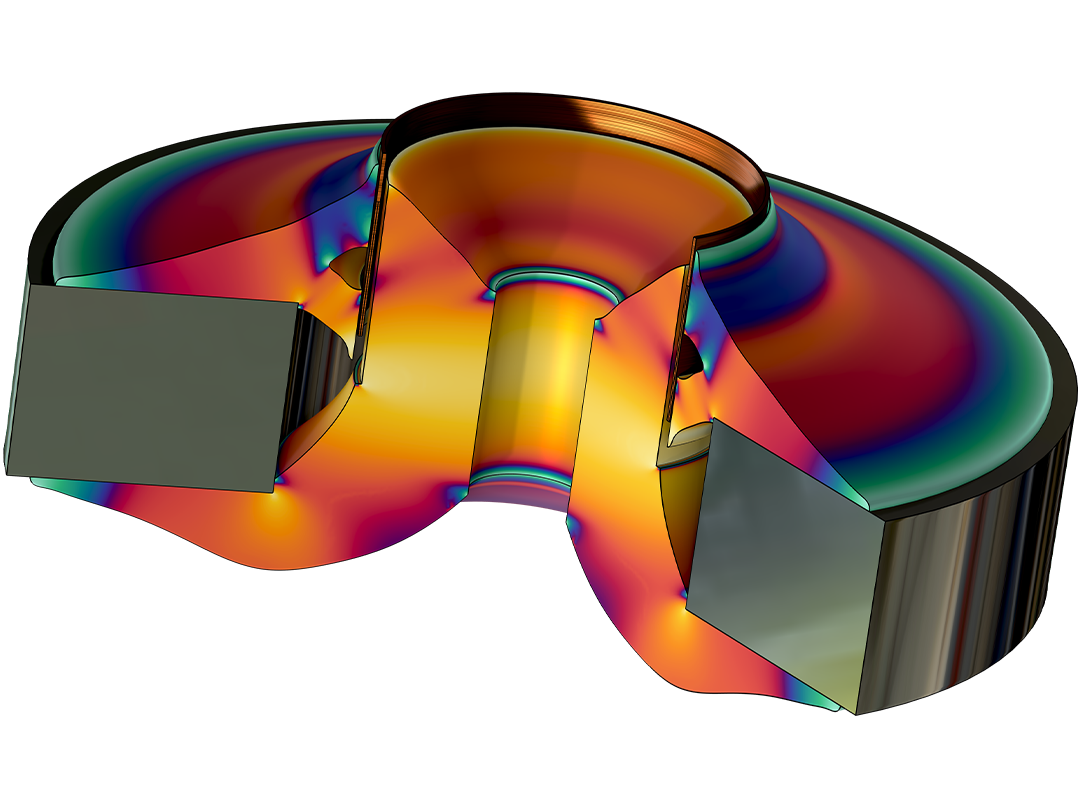
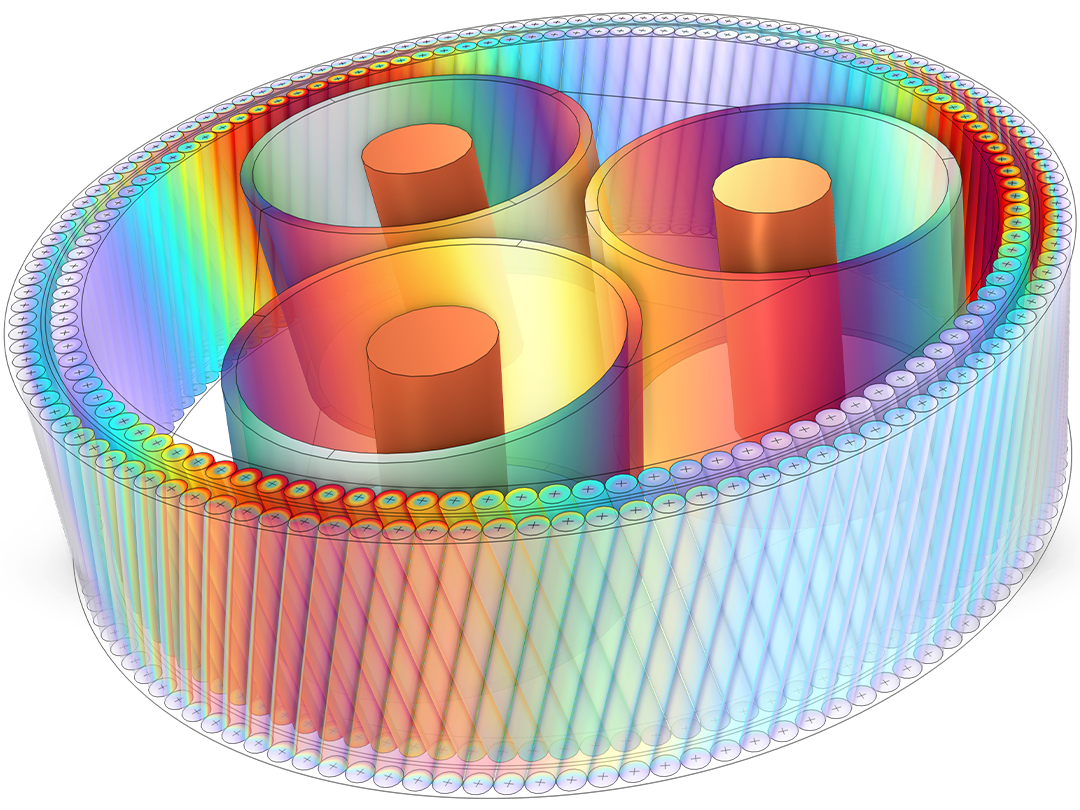
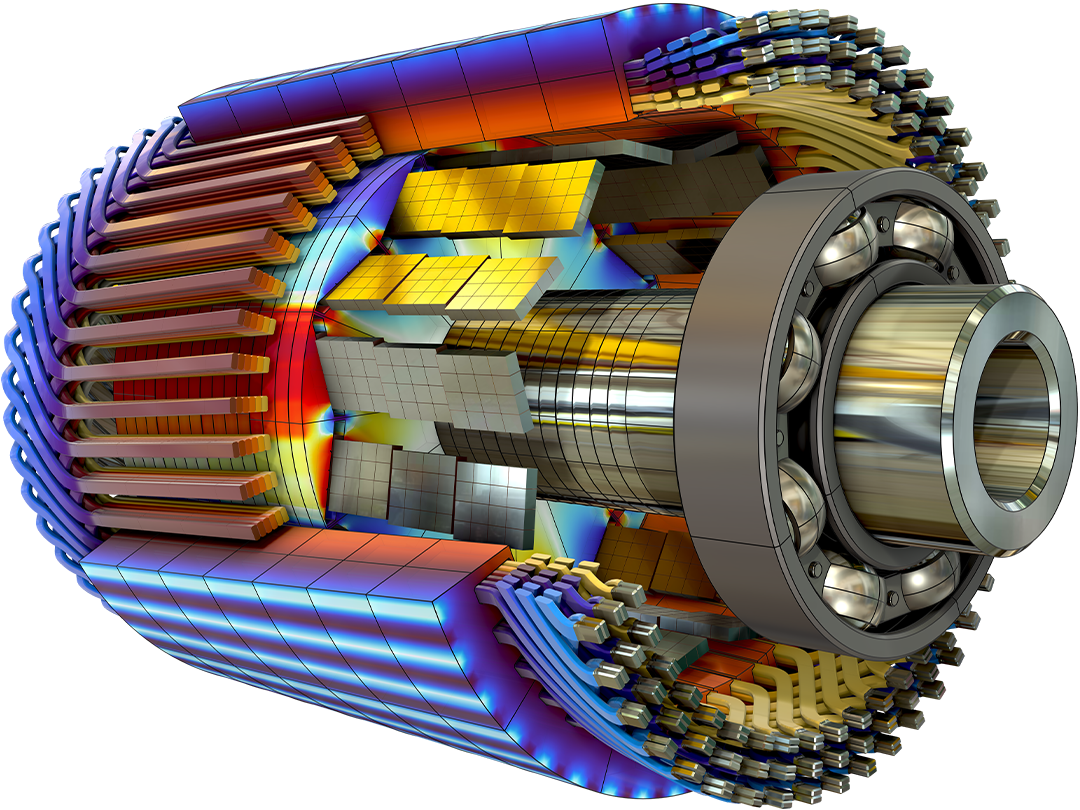
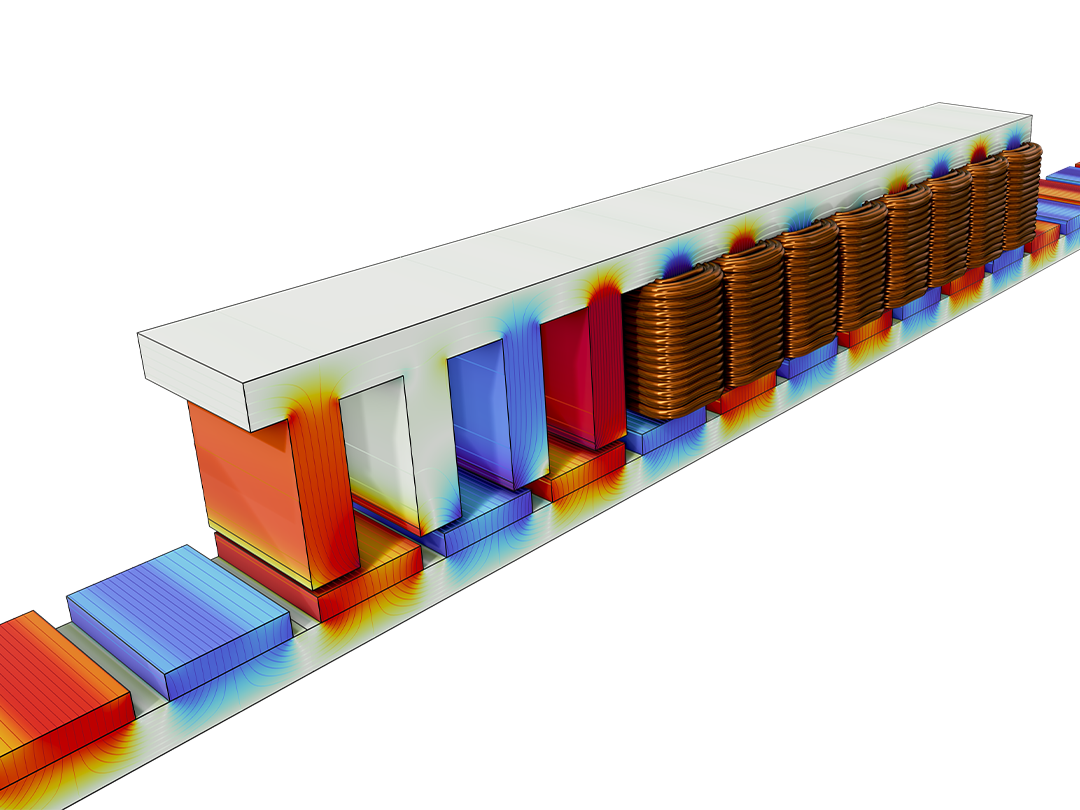
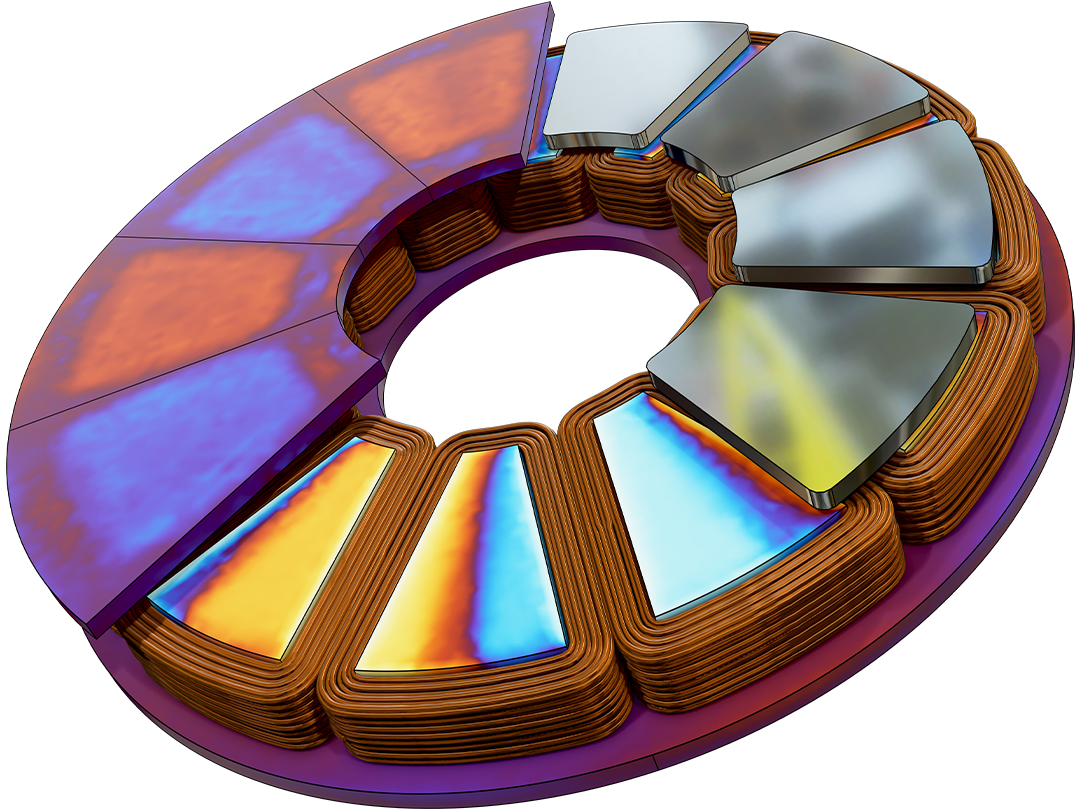
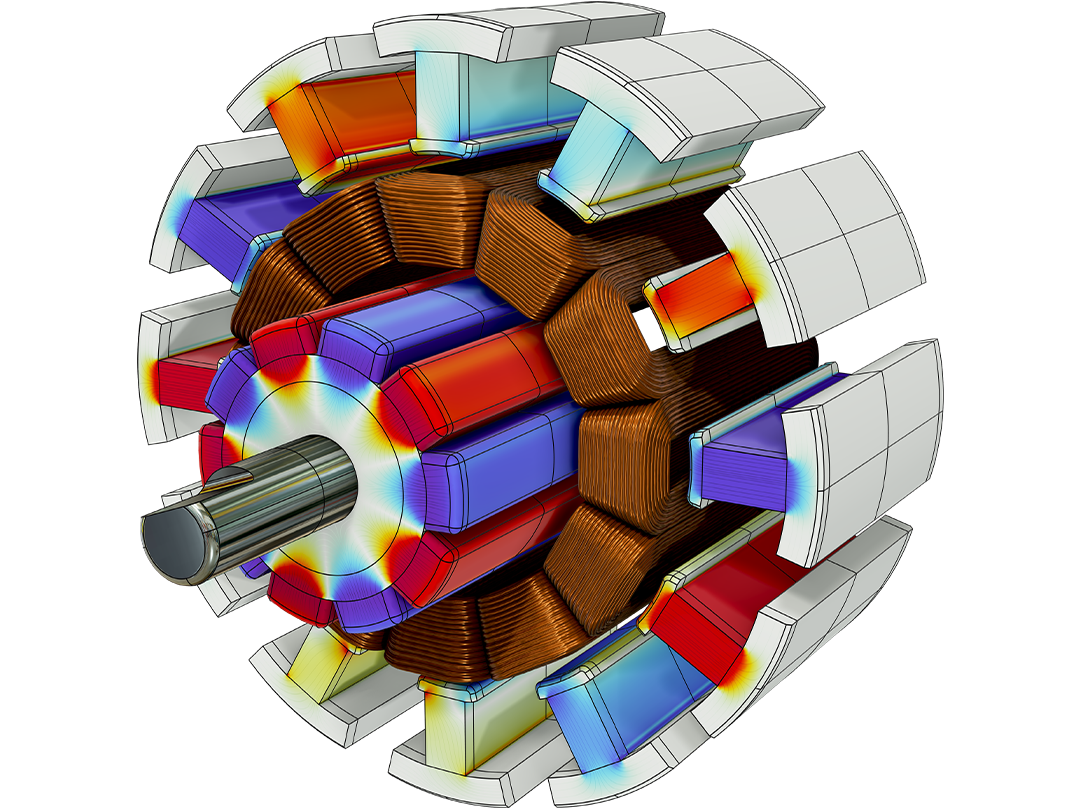
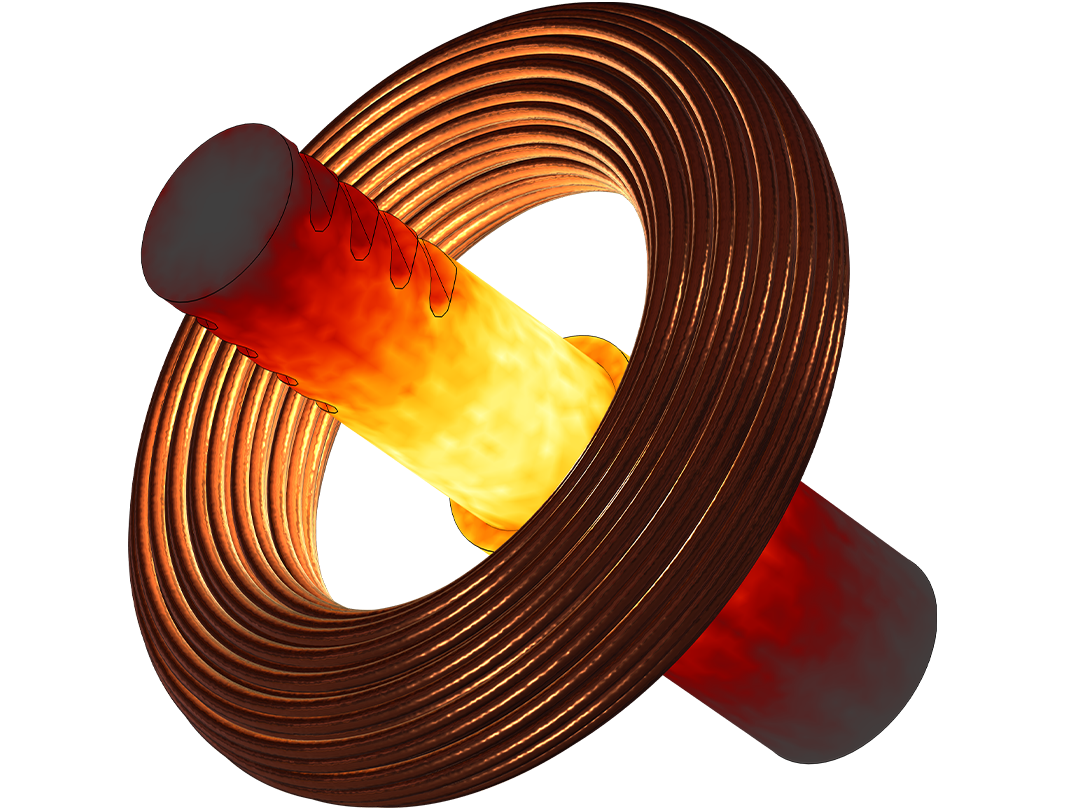
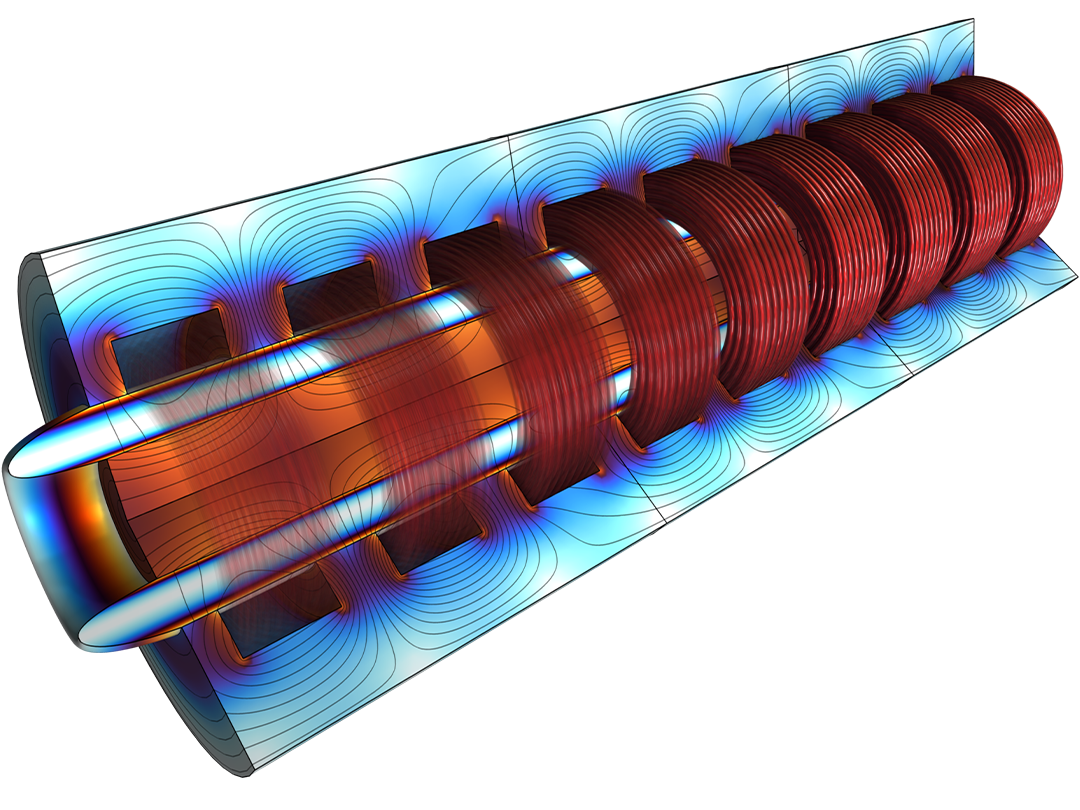
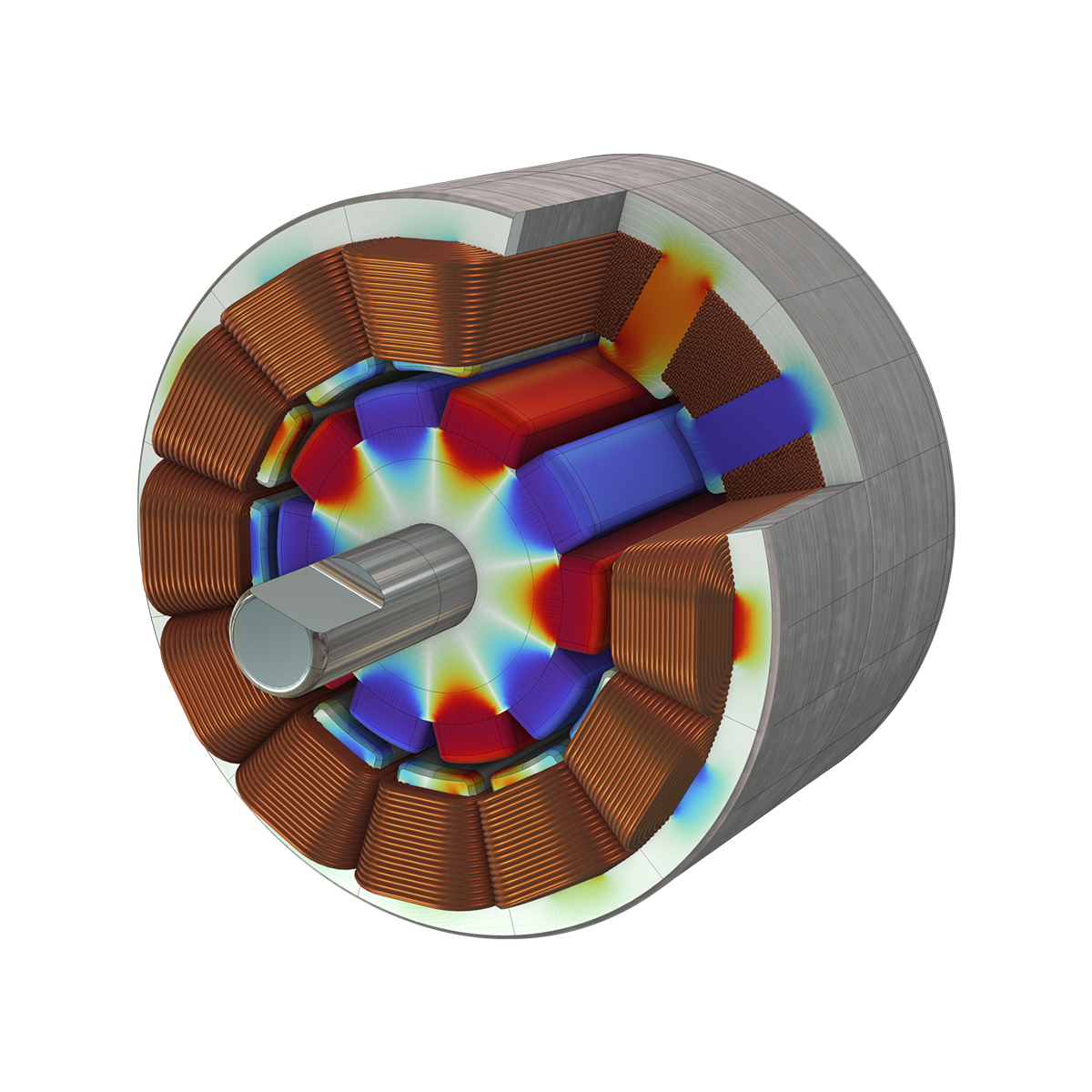
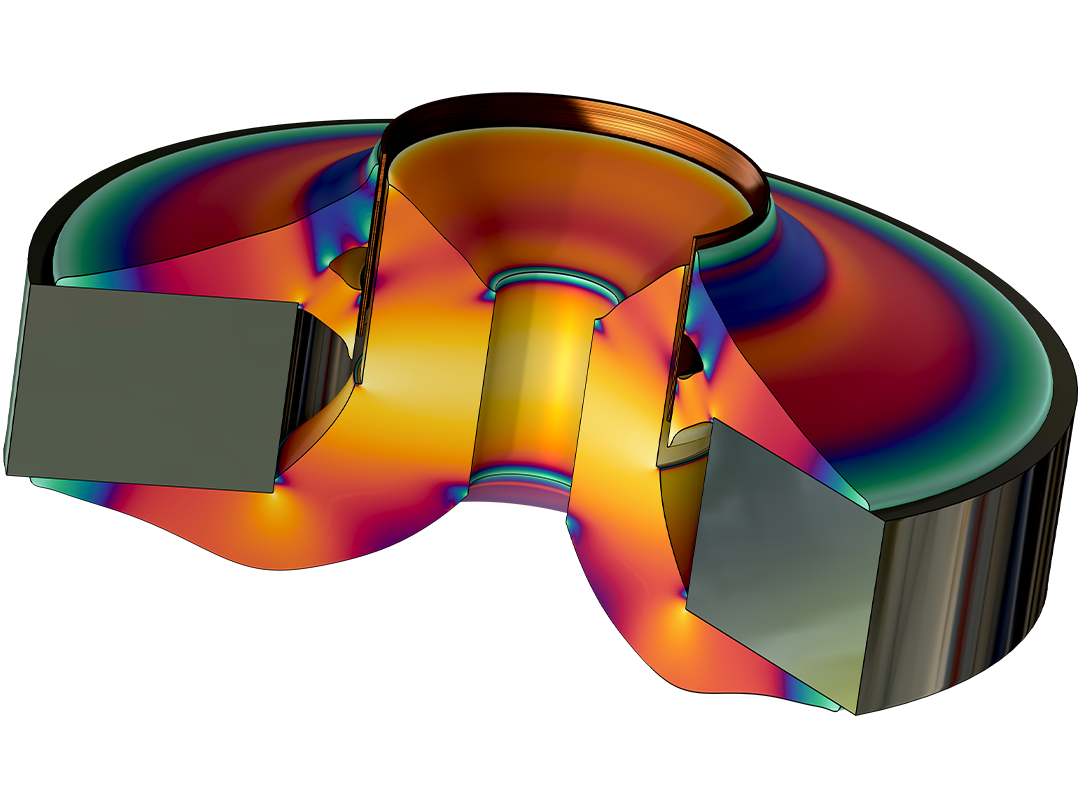
使用铜线圈和彩虹色芯进行可视化的永磁电机三维模型。

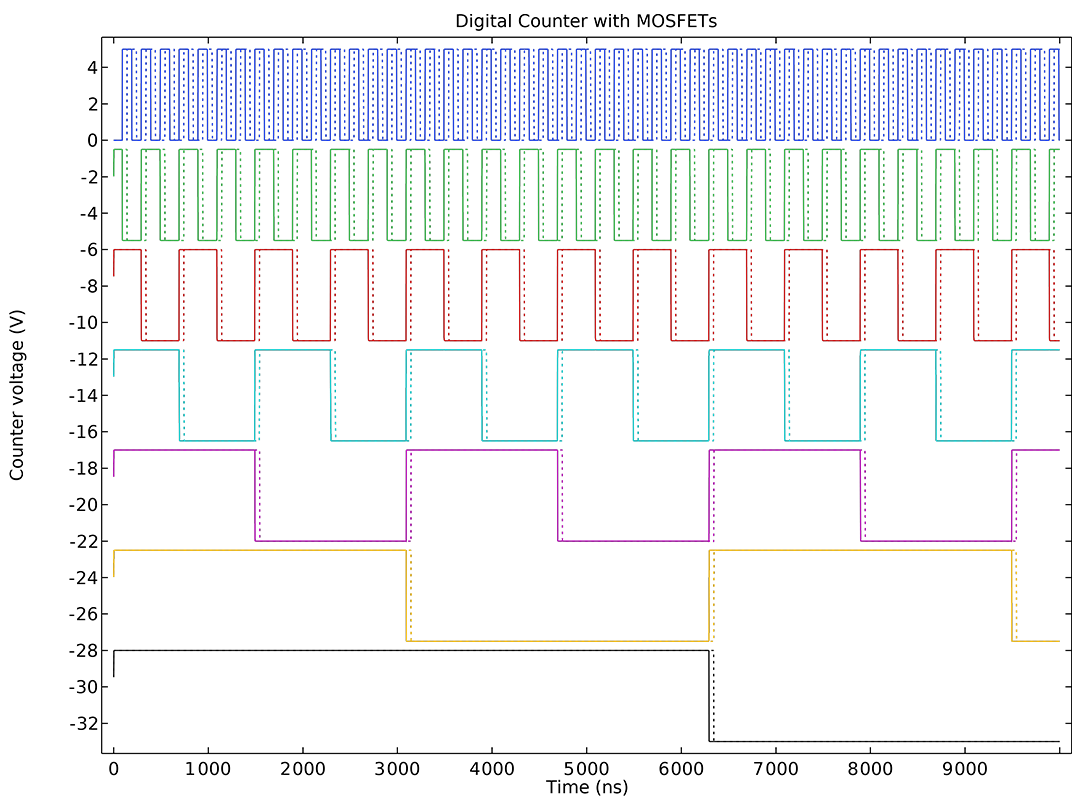
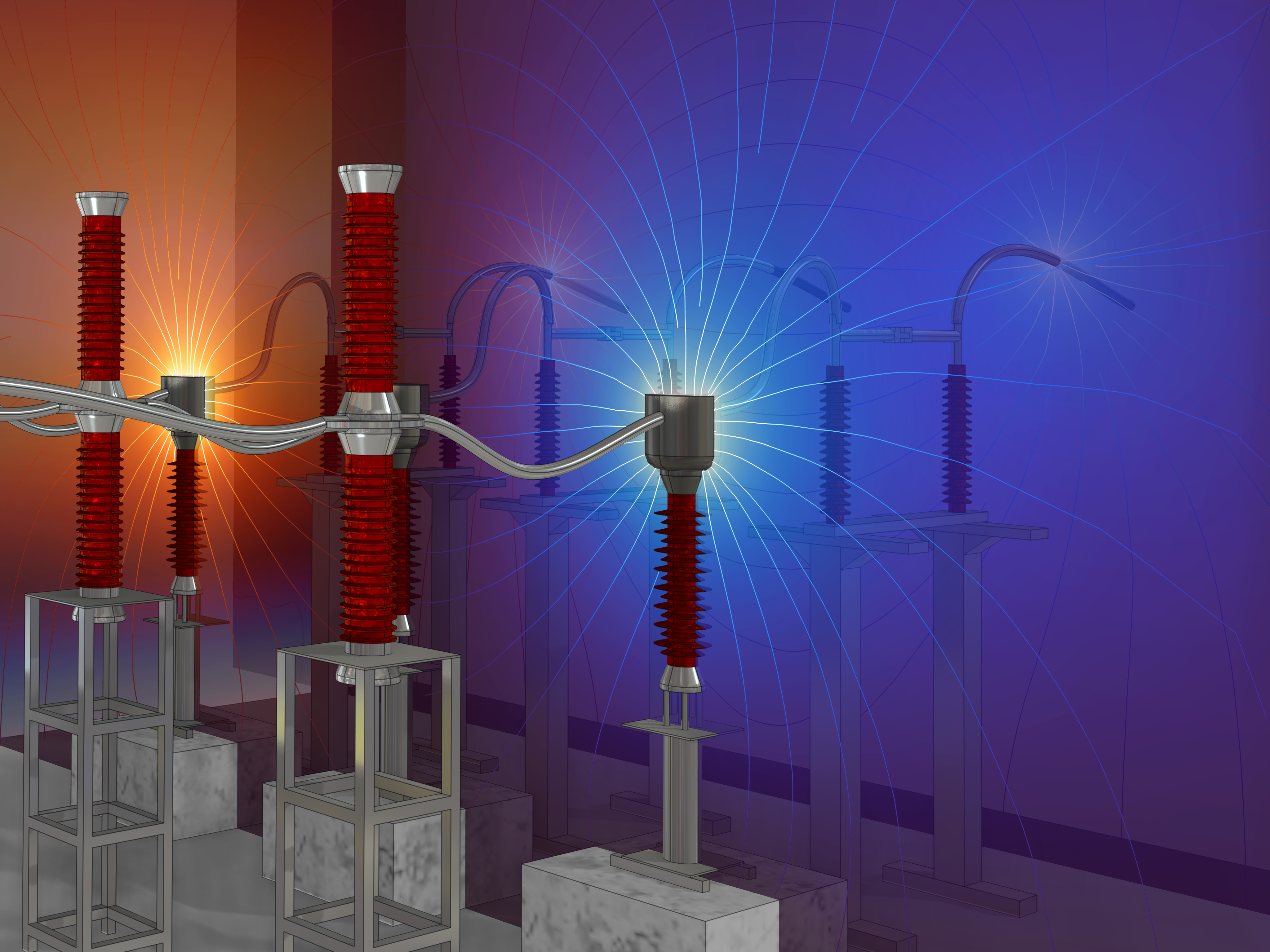
静电

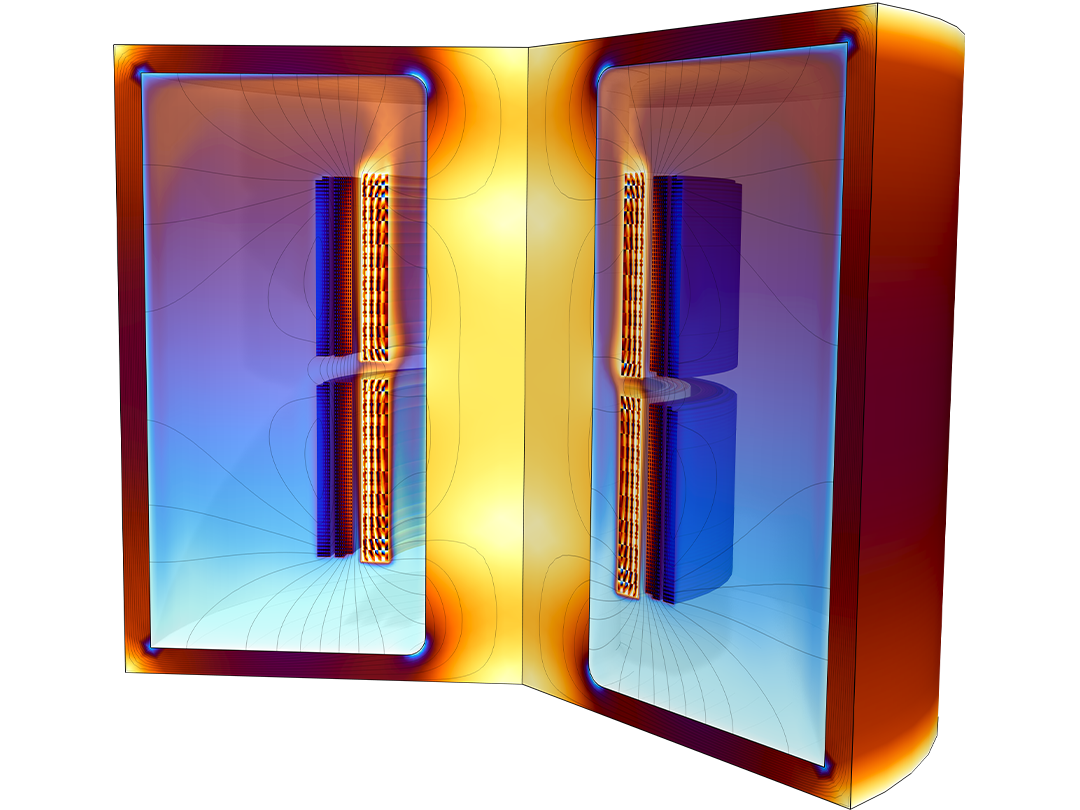
对于不涉及电流流动,电场由电势和电荷分布决定的介电结构,可以通过静电计算来分析电容器件和电绝缘。“AC/DC 模块”提供了有限元(FEM)和边界元(BEM)方法来求解电势,也支持组合使用两种方法(有限元-边界元混合方法)来满足不同问题的需求。基于电势场结果,可以进一步计算如电容矩阵、电场、电荷密度和静电能等物理量,帮助您深入理解和优化系统的静电特性。

电流

通过模拟直流、瞬态或交流等各种形式的电流,用户可以有效地分析电阻和导电器件。在静态和低频条件下,如果可以忽略磁场,基于欧姆定律来计算器件的电流和电势将非常高效,并足以提供准确的结果。基于电势结果,可以进一步计算如电阻、电导率、电场、电流密度和功率损耗等物理量。

“AC/DC 模块”支持稳态、频域、时域和小信号分析;时域和频域分析支持电容效应的计算。

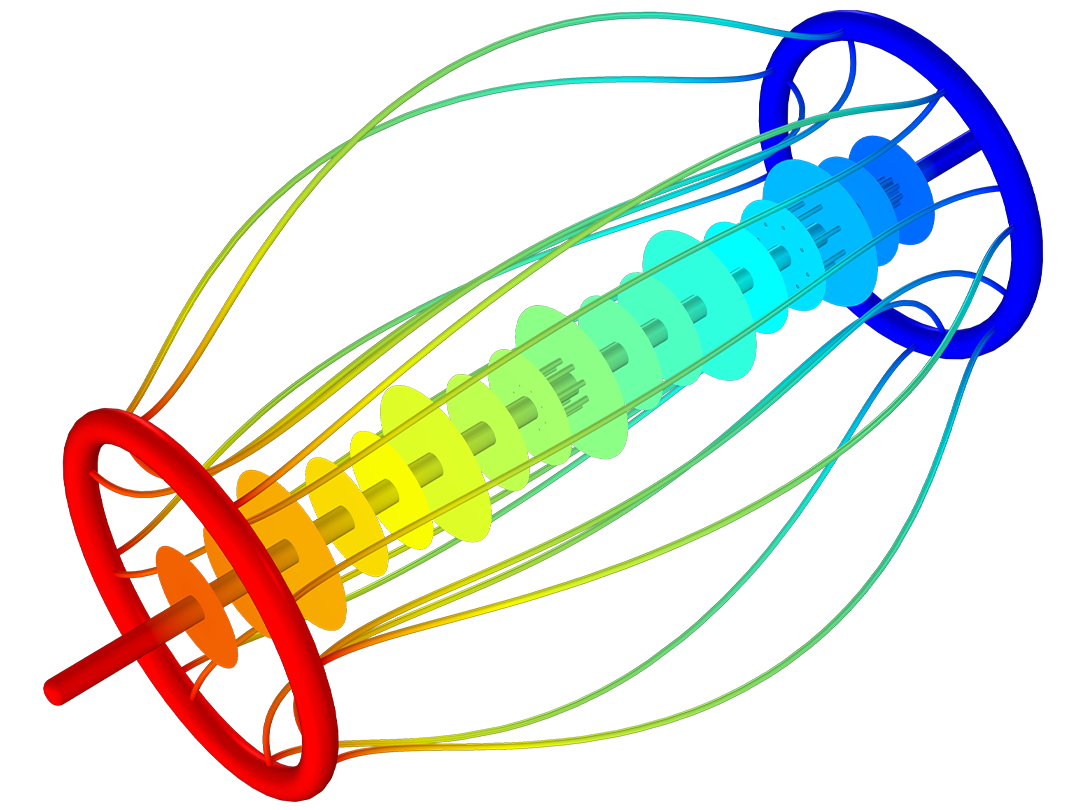
静磁场计算

静磁场仿真可以分析静磁场、寄生电感以及线圈、导体和磁体上的磁力。“AC/DC 模块”提供了丰富的材料数据库,包含各种非线性磁性材料,也支持自定义添加材料。用户需根据所研究问题是否存在电流、是否包含磁性材料等因素,来选择不同的分析方法。

在没有电流的情况下,推荐使用有限元法和边界元法求解静磁问题,或结合使用这两种方法,采用混合有限元-边界元法以提高计算效率。

对于最常见的、同时存在电流和磁性材料的情况,需要通过矢量场公式来定义电势和输入电流,并计算电流密度分布、磁场、磁力、功耗和互感。

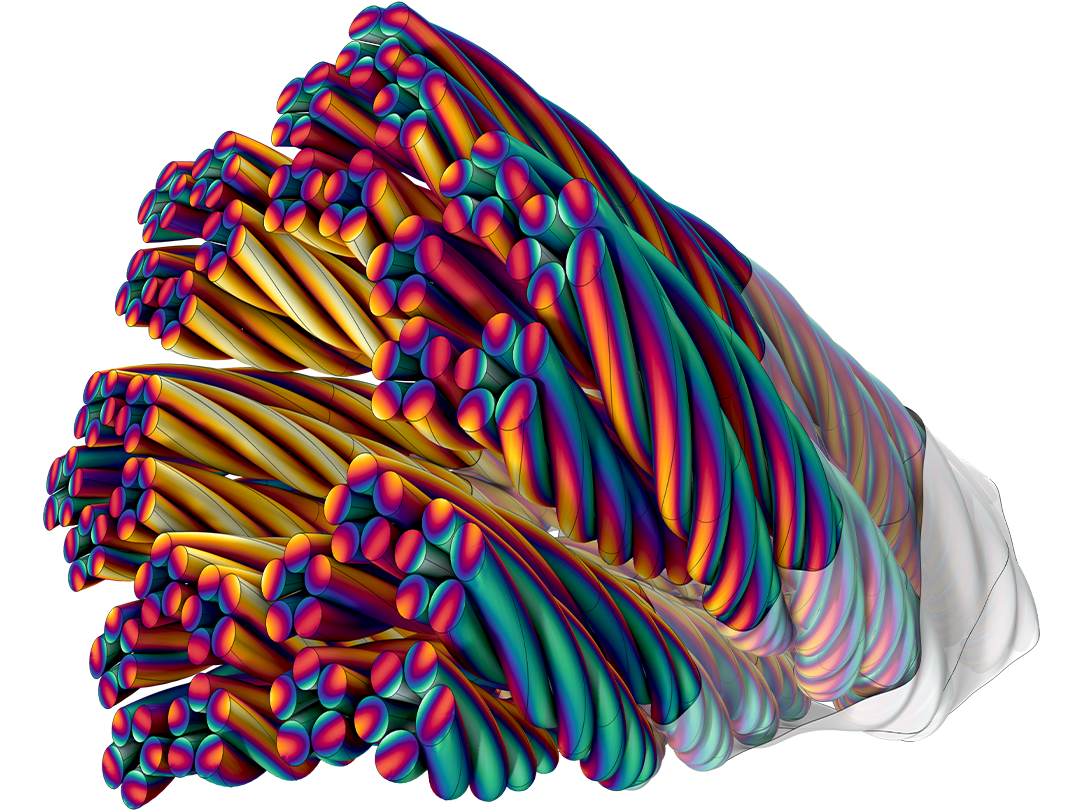
“AC/DC 模块”支持对线圈进行详细的三维建模,精确计算每根导线内的电流分布;也支持通过近似等效的方式简化建模,通过计算线圈电流分布来分析形状复杂的线圈,这对于多匝线圈尤其有效。

Electromagnetics

Full electromagnetics modeling is used to analyze electrical components where electric currents and magnetic fields are coupled. In time-varying problems with significant induction effects, magnetic fields induce currents, and those currents in turn generate magnetic fields.

Electrodynamic effects can be investigated, including skin and proximity effects, Lorentz forces (induction through motion), resonance, and crosstalk. Both frequency-domain and time-domain modeling are supported in 2D and 3D. Specialized formulations are also available for transient magnetic modeling of superconductors.

Typical applications include coils, induction chargers and heaters, switches, busbars, transformers, PCB transient effects, shielding, crosstalk, superconducting devices, magnetohydrodynamics, and nondestructive testing (NDT).

Electromagnetics simulations can be coupled to any other add-on product, such as the Heat Transfer Module, the Structural Mechanics Module, or the CFD Module.

Electric Machinery

Modeling of electric machinery enables optimization of motors, generators, and actuators. Built-in functionality makes it possible to investigate induction and permanent magnet motors, including the evaluation of torque, eddy current losses in magnets, forces, induced currents, and the impact of mechanical loads. Both rigid and flexible body dynamics can be studied under the influence of electromagnetic forces and torques.

Specialized features support the design of various machine types, from radial flux motors to hybrid axial–radial flux rotors, claw-pole rotors, and tubular linear machines. Linear motion can also be modeled using moving mesh functionality, which is important for devices such as plungers, solenoids, switches, and actuators.

By combining the AC/DC Module with other physics modules, multiphysics analyses — including structural mechanics for deformation, rotordynamics, heat transfer for thermal management, acoustics for noise and vibration, and CFD for cooling channel optimization — can be performed.

Electrical Circuits

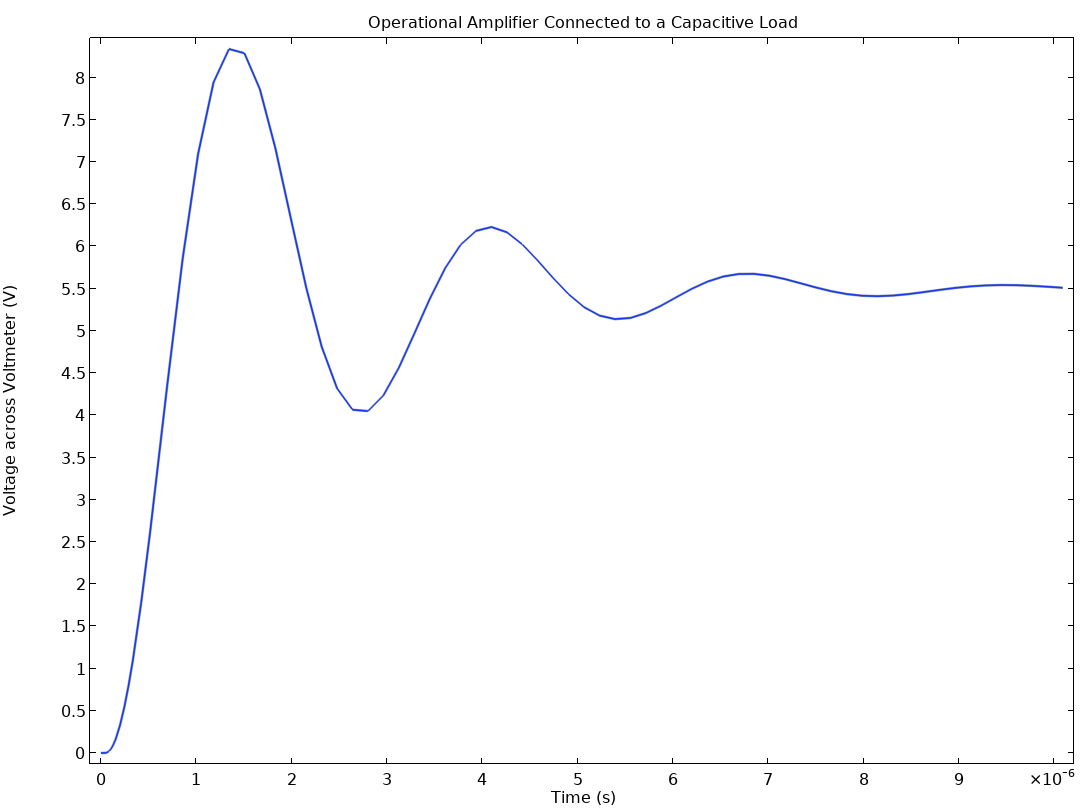
The AC/DC Module provides a dedicated physics interface for analyzing lumped systems and circuits. Using this interface, common components such as voltage and current sources, resistors, capacitors, inductors, transformers, diodes, and transistors can be modeled. More complex elements can be added using subcircuits. Circuits can also be imported and exported in the SPICE netlist format.

Circuit models can be combined with 2D or 3D finite element models. Resistance, capacitance, and inductance matrices can be extracted from finite element models, which can then be used to create efficient lumped circuit representations. The direct coupling between circuits and finite element models enable simulation of, for example, motor control circuits or oscillator circuits in induction chargers. Hybrid submodeling is possible as well, where detailed finite element regions are reduced to circuit representations for efficient simulation.

AC/DC 模块的主要功能

“AC/DC 模块”提供了一系列专用工具来实现静态、低频电磁场仿真

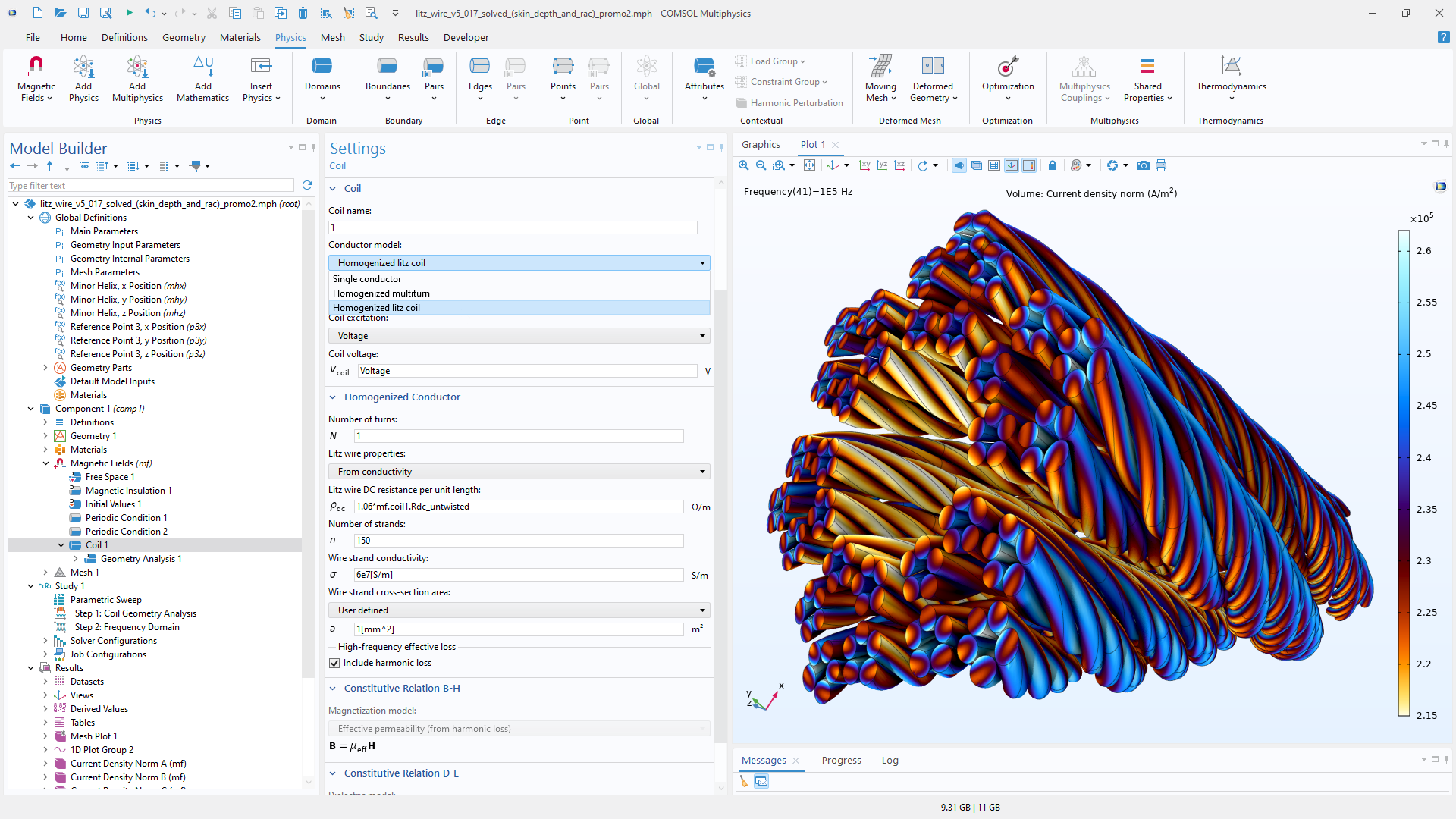
A close-up view of the Model Builder with the Coil node highlighted and a litz wire model in the Graphics window.

内置用户界面

“AC/DC 模块”为上述各个电磁领域都提供了预置的用户接口,让用户能够快速创建复杂的模型。用户可以使用这些接口设置域方程、边界条件、初始条件、预定义的网格、带有稳态和瞬态分析求解器设置的预定义研究,以及预定义的绘图和派生值等。

模块中还提供一系列用于连接不同接口的耦合功能,特别适用于电感器、线圈和电机等应用领域。

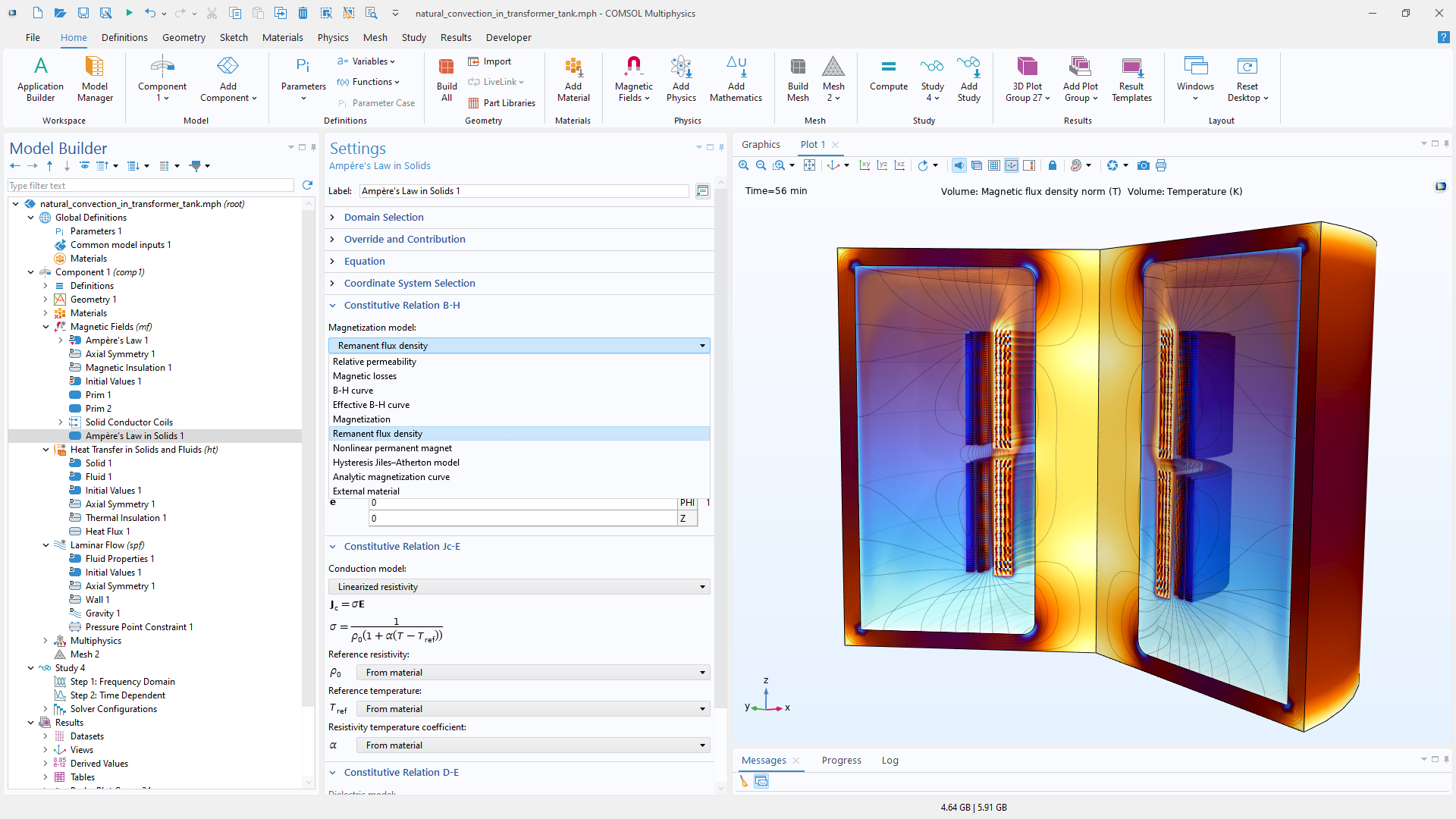
A close-up view of the Ampère's Law in Solids settings and a transformer tank model in the Graphics window.

Magnetic Materials

A comprehensive database of magnetic materials is included in the AC/DC Module, covering ferromagnetic, ferrimagnetic, soft magnetic (B–H curves), and hard magnetic materials (permanent magnets). Support is provided for nonlinear material models, magnetic loss modeling in the frequency domain using effective B–H curves and complex permeability, as well as anisotropic hysteresis based on the Jiles–Atherton model.

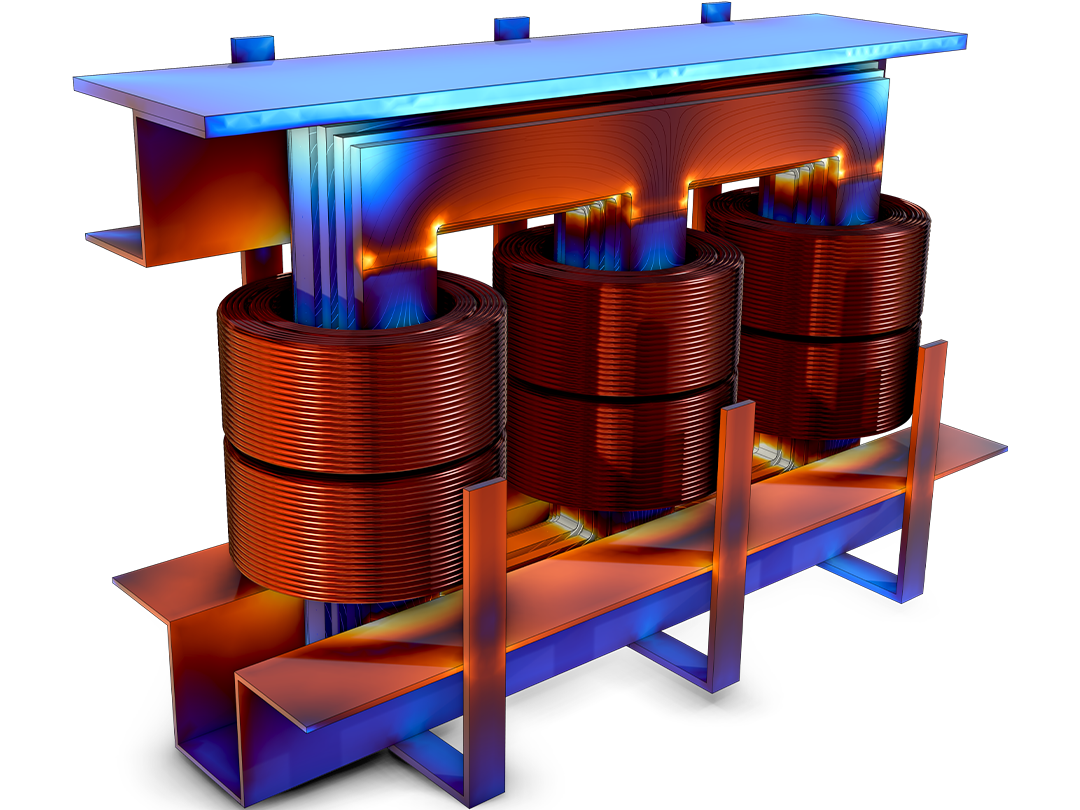
Specialized capabilities for modeling laminated electrical steel include laminated core modeling features and empirical loss models such as Steinmetz and Bertotti, which enable realistic loss estimation without resolving individual lamina.

Materials can be defined as spatially varying, anisotropic, time varying, or field dependent. Full support is provided for user-defined properties and modeling of custom behaviors, including anisotropic nonlinearity, permanent demagnetization, and Curie effects.

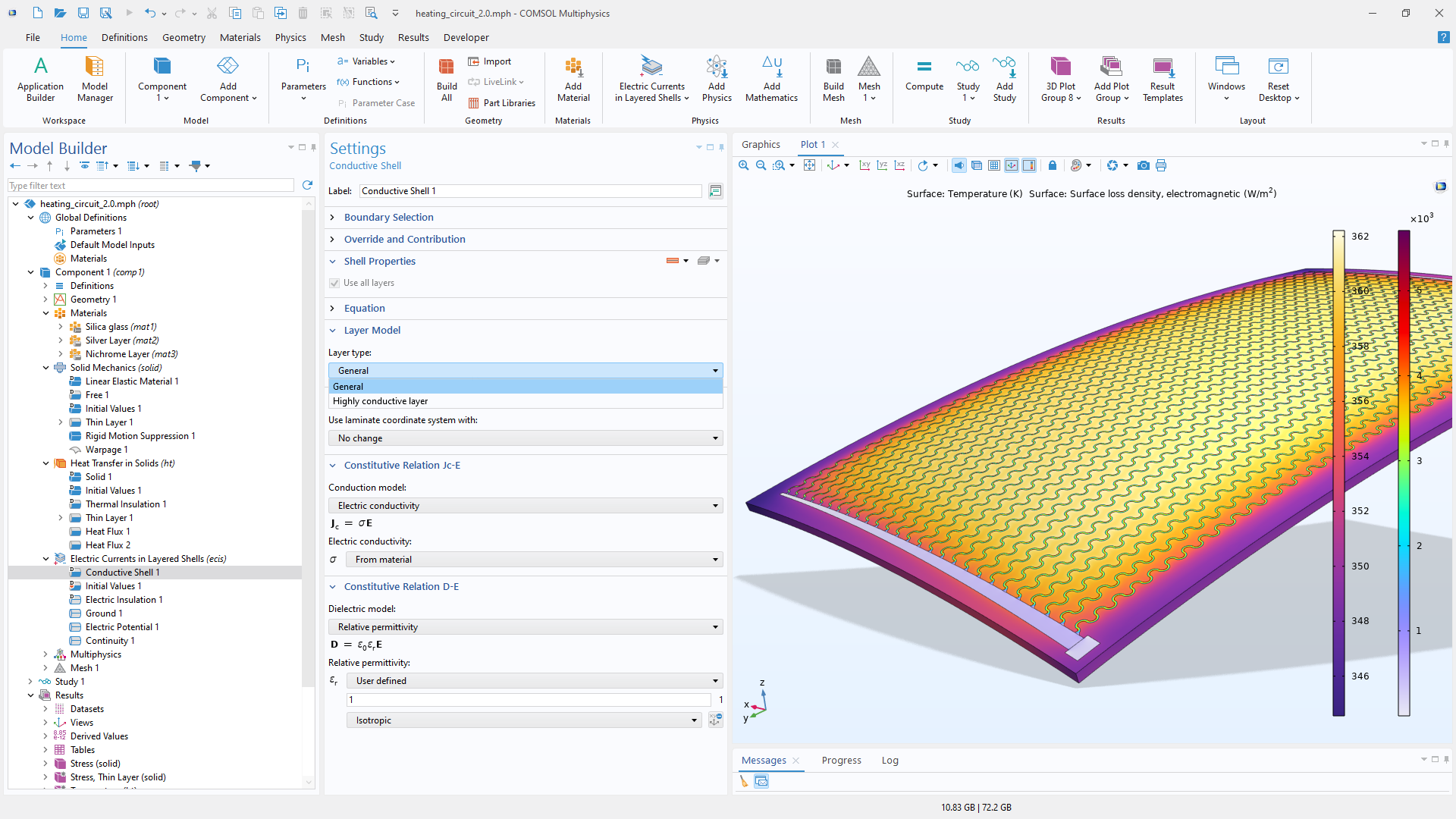
A close-up view of the Conductive Shell settings and a heating circuit model in the Graphics window.

Thin Structures and Layered Materials

Very thin structures can be efficiently modeled using shell formulations for direct current, electrostatic, magnetostatic, and induction analyses. In addition, specialized functionality supports the modeling of direct currents in multilayer shell structures. The electromagnetic shell modeling capabilities allow thin volumetric domains to be replaced by zero-thickness boundary conditions with equivalent physical behavior, significantly simplifying geometry preparation, meshing, and solution procedures.

At higher frequencies, where the skin depth becomes small and currents are confined to the conductor surface, specialized boundary features provide a more efficient conductor representation.

For dielectric and weakly conducting materials, the framework supports:

  • Polarization effects and remanent electric displacement
  • A wide range of complex loss models, including ferroelectric behavior
  • Dispersion models in both the frequency and time domains

Built-in dispersion formulations include multipole Debye, Cole–Cole, and Havriliak–Negami models. These capabilities are especially important for tissue modeling and bioengineering applications.

The same level of flexibility available for magnetic materials also applies to conductors and dielectrics. Through user-defined formulations, the material library can be easily extended to incorporate custom material models.

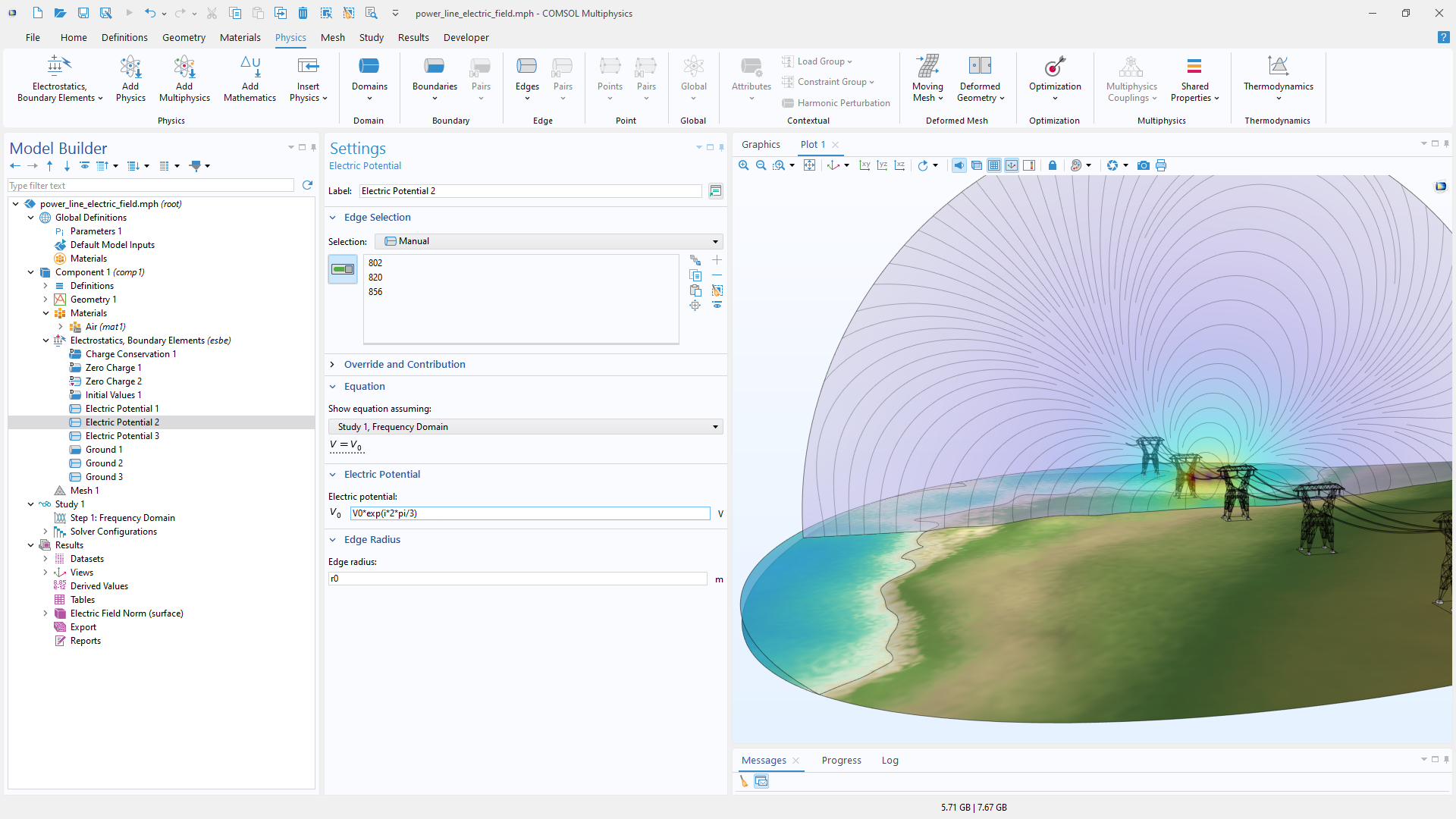
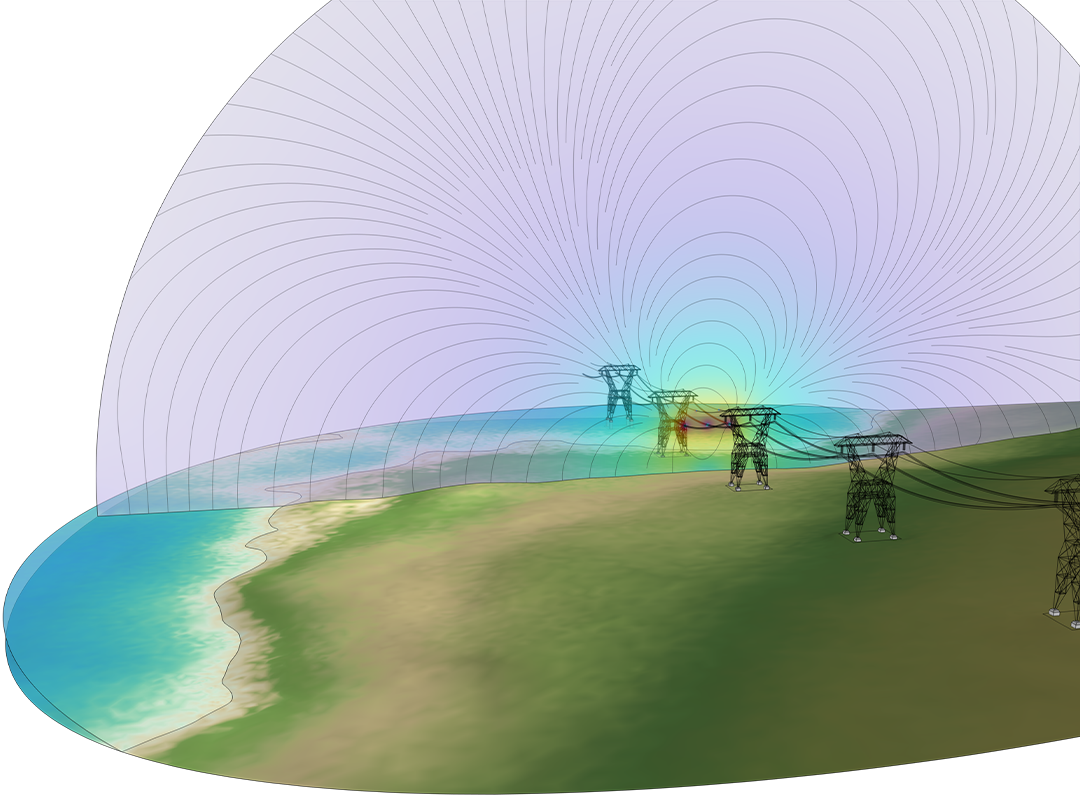
A close-up view of the Model Builder with the Electric Potential node highlighted and a power line model in the Graphics window.

Unbounded or Large Domains

To accurately model unbounded or large domains, infinite elements are available for both electric and magnetic field formulations. For electrostatic and magnetostatic analyses, the boundary element method (BEM) provides an alternative approach for representing large or infinite regions. In addition, the BEM can be coupled with finite element–based physics interfaces to enable hybrid BEM–FEM simulation.

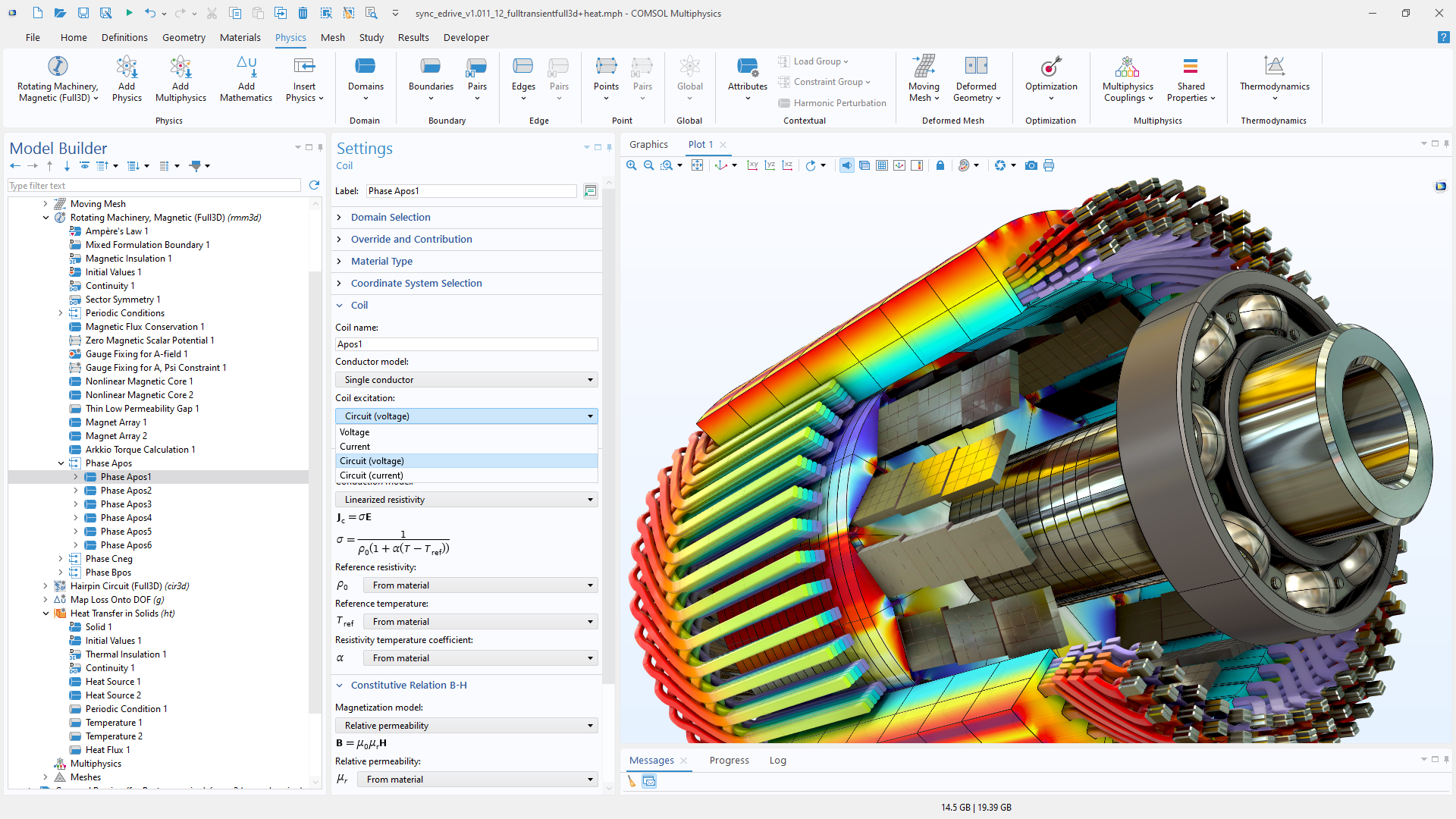
A close-up view of the Coil settings and a motor model in the Graphics window.

Coils, Terminals, and Device Excitations

The AC/DC Module's electromagnetics modeling capabilities include specialized functionality for accurate simulation of electromagnetic excitations, loads, and device behaviors.

The coil modeling tools handle everything from solid conductors with skin and proximity effects to stranded wire bundles designed to minimize AC losses. They also support designs such as litz wires, tightly wound coils, and segmented high-voltage conductors.

Terminal definitions make it easy to specify voltages, currents, or charges while also supporting floating potentials, measurement points, and electrical circuit connections. Options for distributed capacitance and impedance modeling enable accurate representation of electrodes with dielectric or resistive coatings.

A range of general-purpose excitation methods is also available, which includes support for voltage constraints, for example, ground planes, and the ability to define surface currents directly.

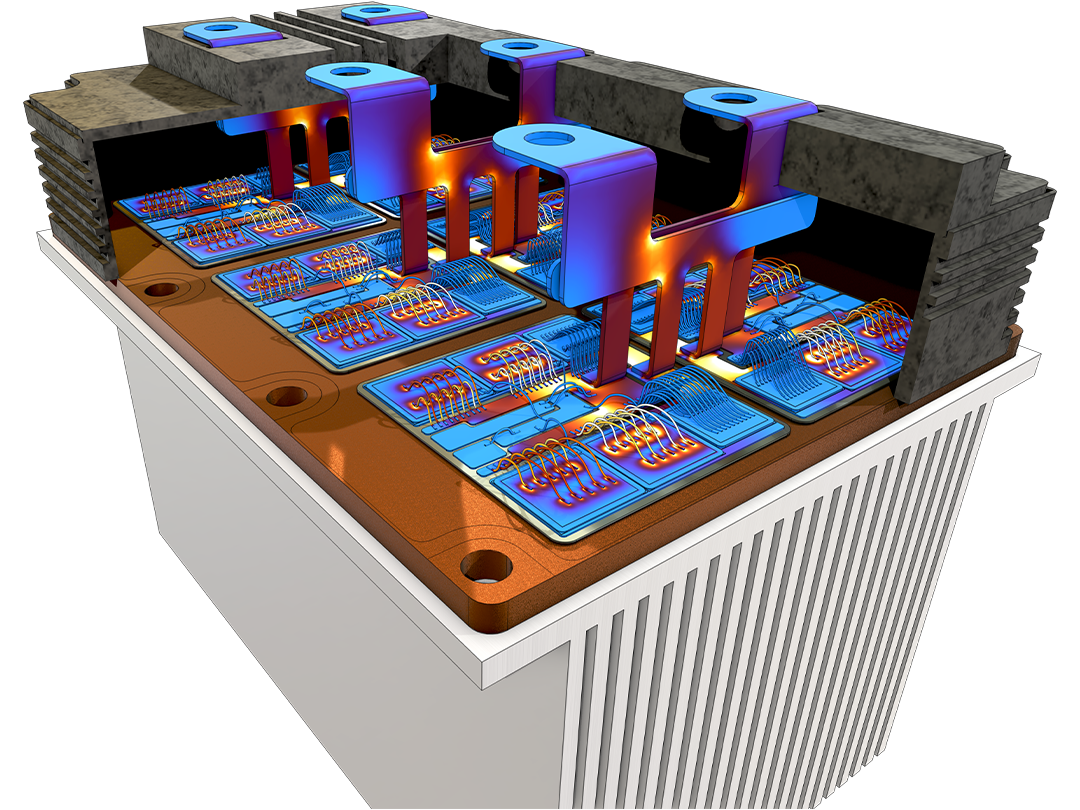
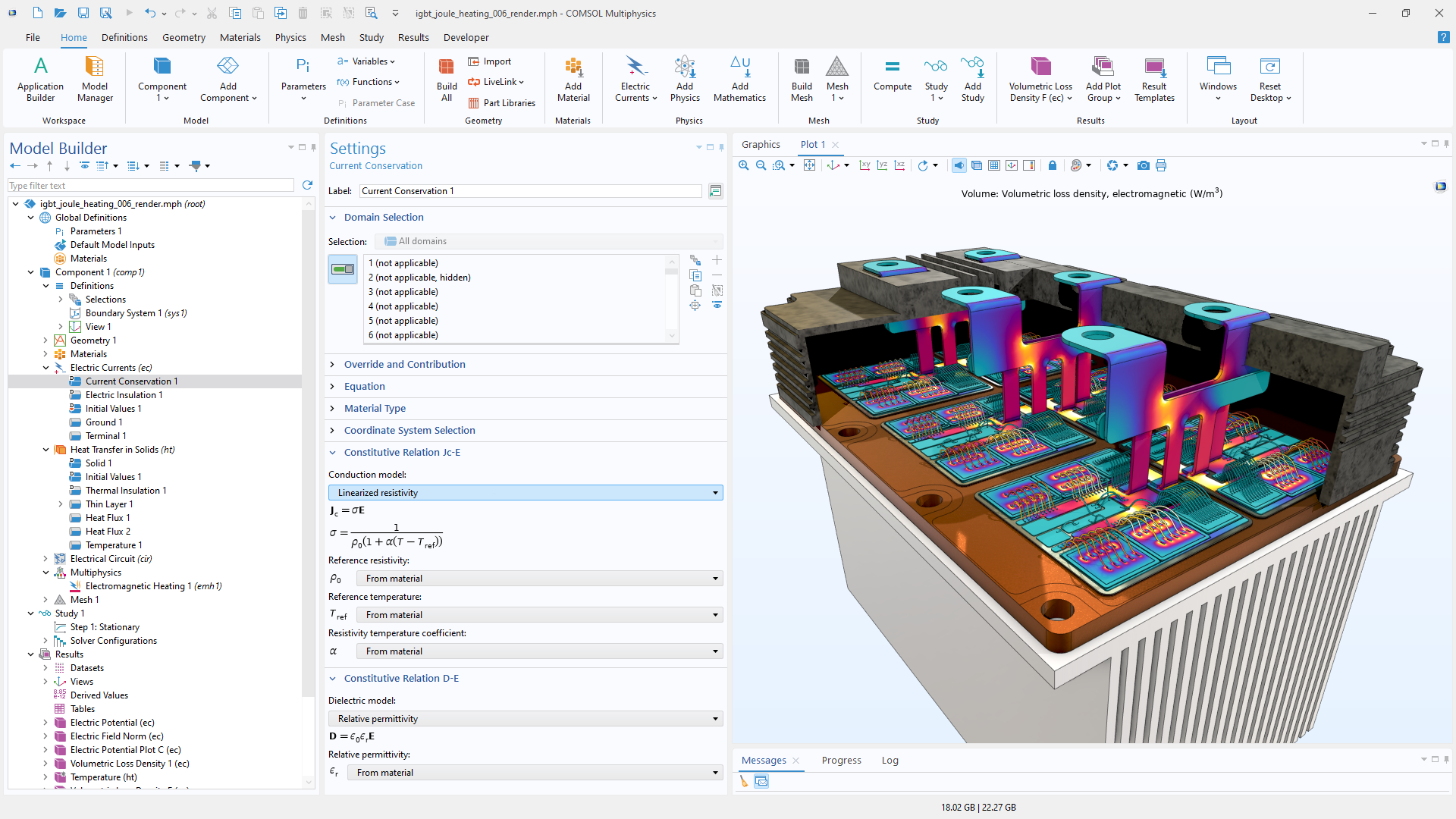
A close-up view of the Model Builder with the Current Conservation node highlighted and an IGBT model in the Graphics window.

Electric and Dielectric Materials

Conducting materials support both temperature- and electromagnetic-field-dependent behavior. Under electrodynamic conditions, skin and proximity effects can be included or selectively suppressed, enabling efficient modeling of laminated steel, wound coils, and twisted wire bundles. In particular, litz cables can be modeled at or above their design frequency without resolving individual strands.

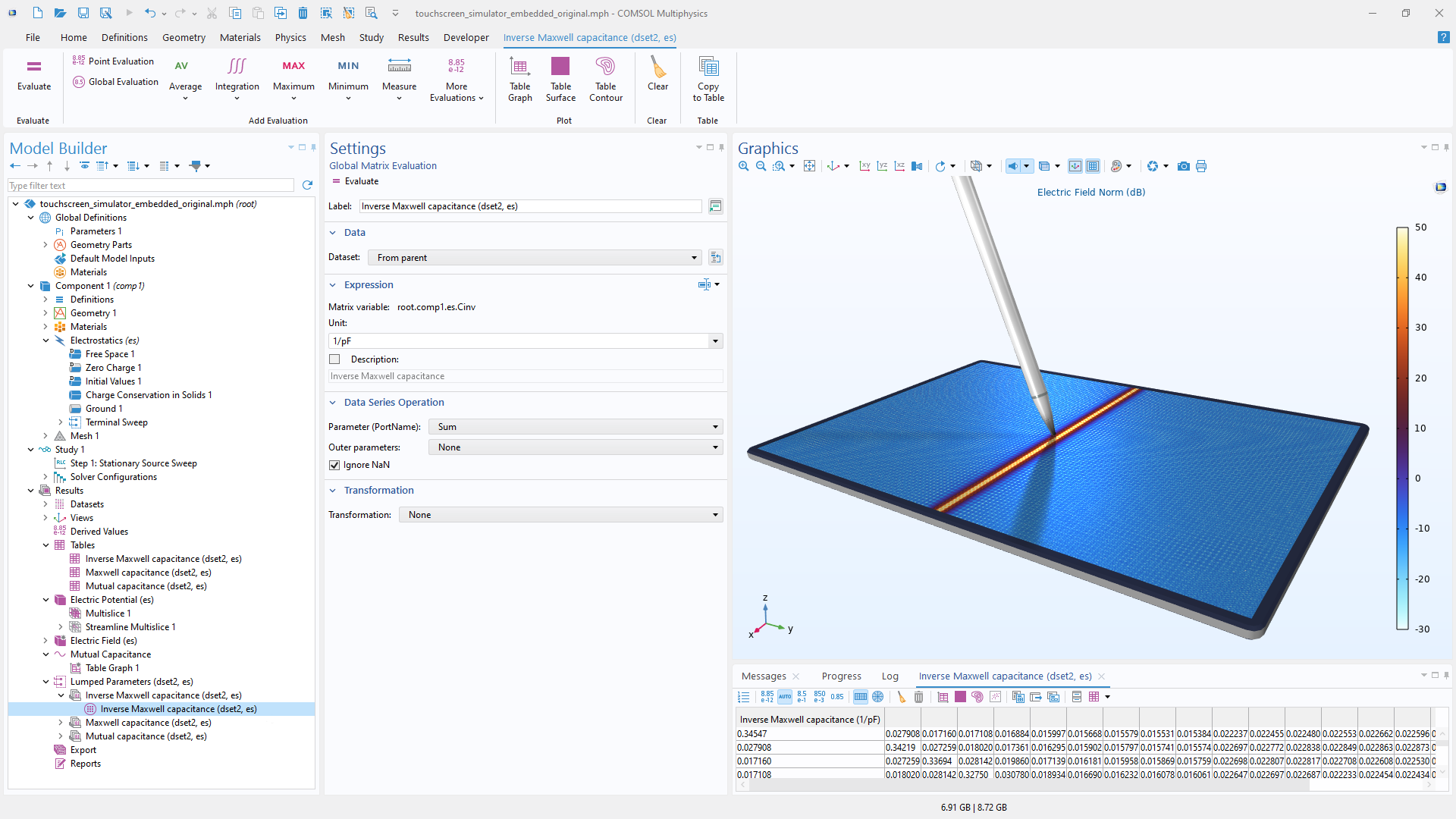
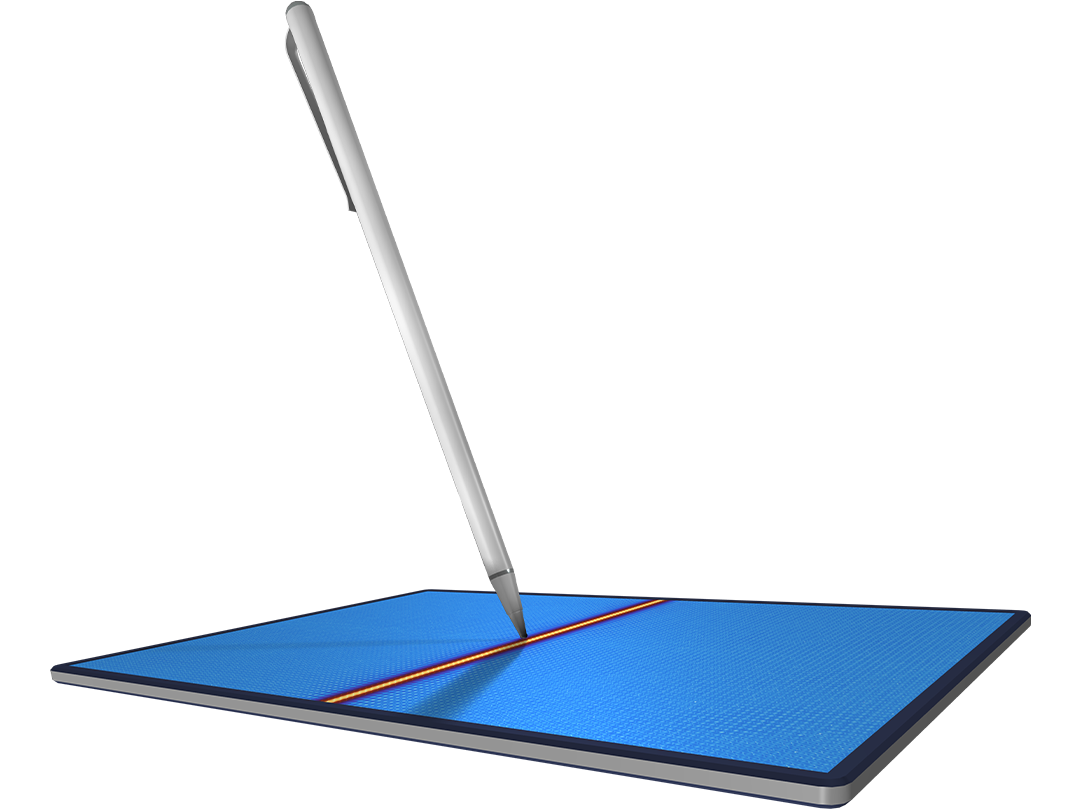
A close-up view of the Global Matrix Evaluation node highlighted and a touchscreen model in the Graphics window.

Data Extraction and Results Evaluation

Excitation features, such as Coil, Terminal, and Port, automatically provide output variables for various electrical quantities, including:

  • Voltage, current, and charge
  • Resistance, inductance, and capacitance
  • S-parameters

Dedicated frequency-sweep functionality, together with optimized solver settings, enables efficient extraction of capacitance, resistance, and inductance matrices. This functionality makes it straightforward to convert a detailed finite element model into a simplified lumped electrical circuit representation.

Specialized features are also available for computing specific physical quantities, such as electromagnetic forces and total losses.

Extensive customization options make it possible to evaluate, integrate, or differentiate any quantity derived from the solution. A wide range of results-evaluation tools enables precise extraction of the data required for analysis.

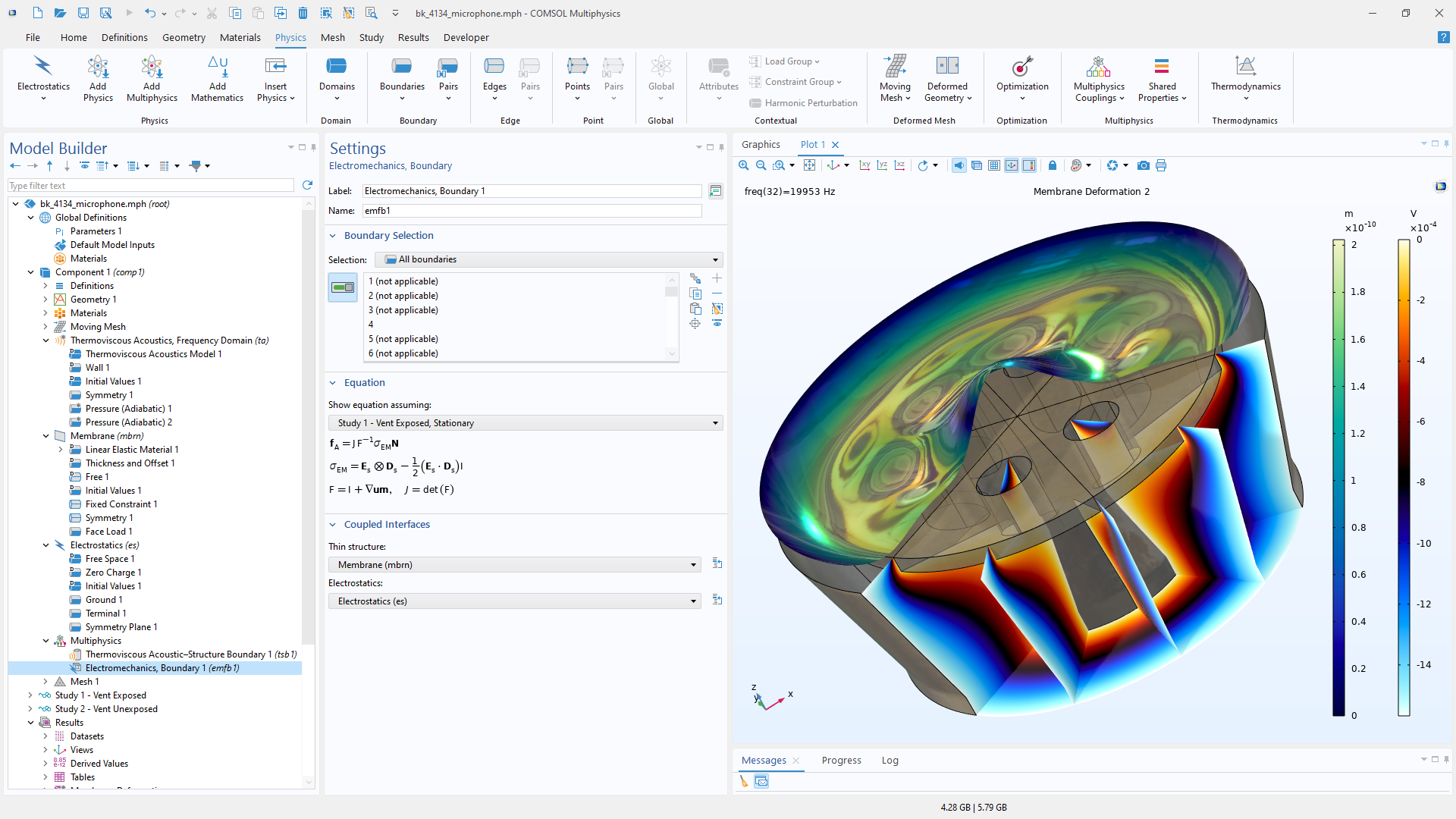
A close-up view of the Electromechanics, Boundary node highlighted and a microphone model in the Graphics window.

Multiphysics

Because electromagnetic phenomena typically occur in a multiphysics context, the AC/DC Module offers extensive options for coupling its physics with those from other add-on products, such as the:

  • Structural Mechanics Module
  • Heat Transfer Module
  • Acoustics Module
  • CFD Module
  • Plasma Module
  • Electric Discharge Module

Built-in multiphysics couplings provide functionality for modeling magnetomechanics, electromechanics, Joule heating and thermal expansion, induction heating, piezomagnetism, piezoelectricity, piezoresistivity, nonlinear magnetostriction, electrostriction, ferroelectroelasticity, the thermoelectric effect, pyroelectricity, and magnetohydrodynamics.

In addition to these predefined couplings, manual multiphysics couplings can be defined and solved using fully coupled or sequential approaches.

低频电磁和多物理场

电磁元器件工作时会涉及多种物理效应,在 COMSOL Multiphysics® 中可以轻松分析这些多物理场效应。

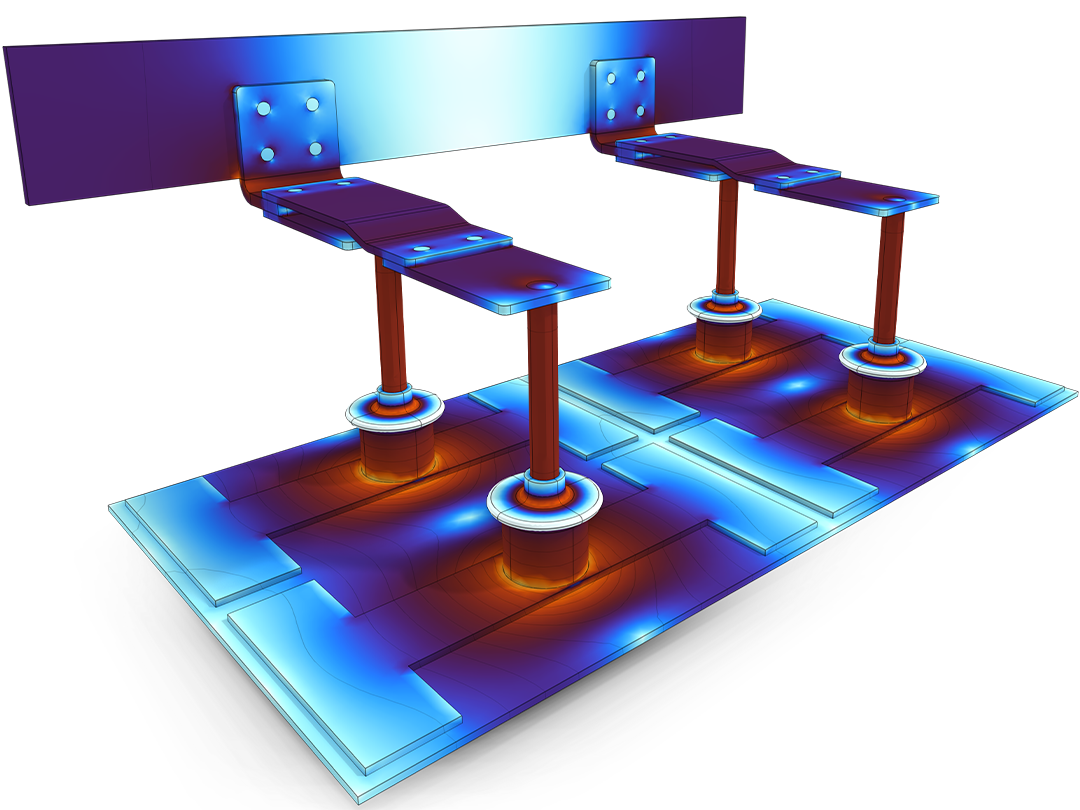
A close-up view of a busbar–anode assembly showing the distribution of electromagnetic heat sources.

焦耳热和电阻热1

固体、流体、壳和多层壳中的焦耳热(也称为电阻热)。

A close-up view of a workpiece model showing industrial induction heating.

感应加热

感应加热用于模拟管线感应加热器和金属加工。

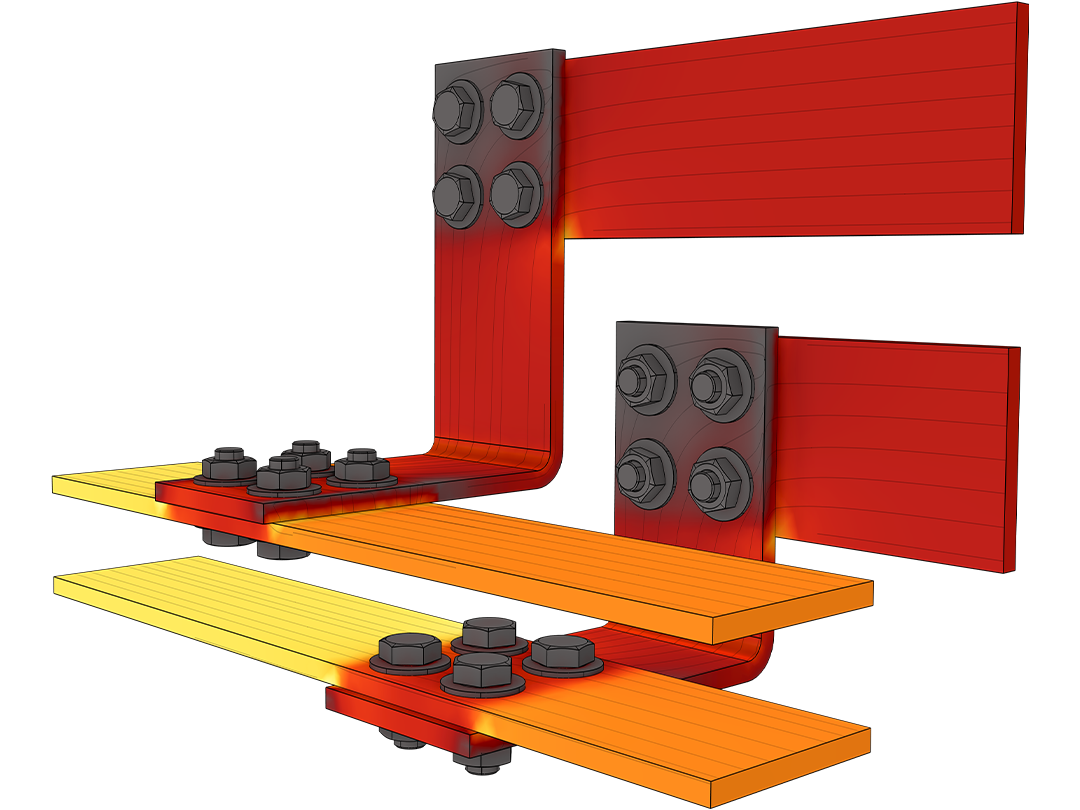
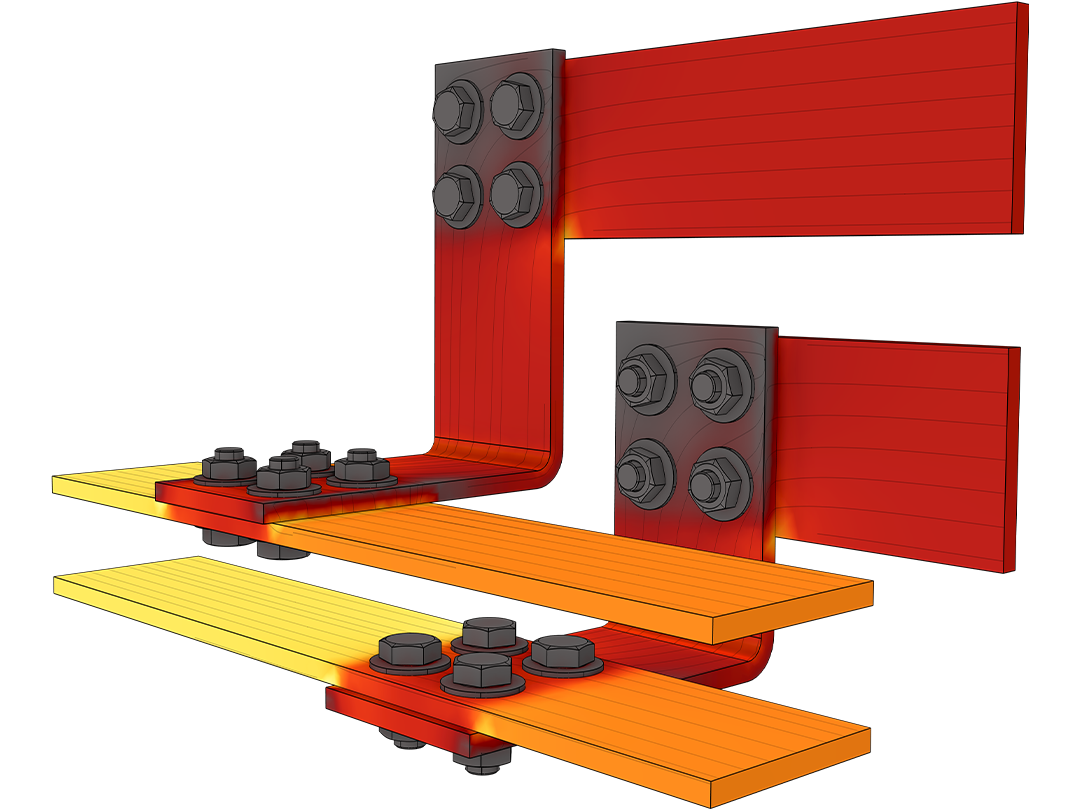
A close-up view of bolted busbars showing electrical contact points.

电接触电阻

在相互接触的金属片之间流动的电流。结合热接触2 和机械接触3 进行分析。

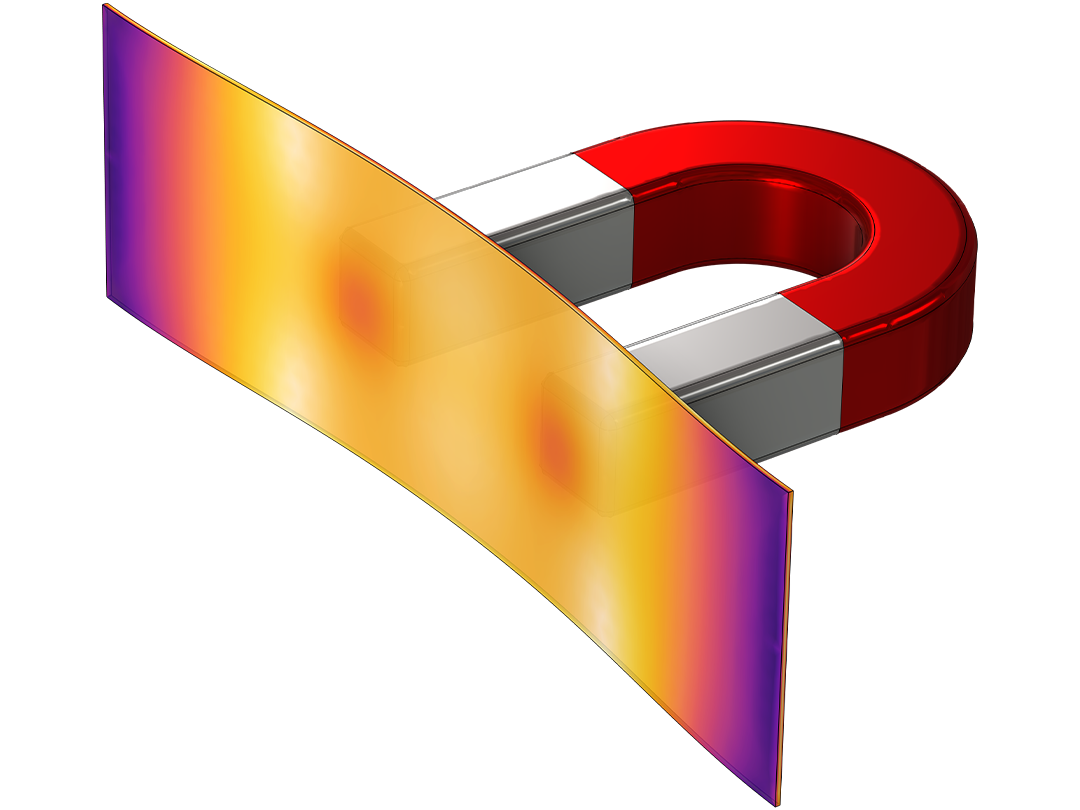
A close-up view of a permanent magnet model showing the deformation in an iron plate.

电磁力和扭矩

基于有限元和边界元的电磁应力、力和扭矩计算。

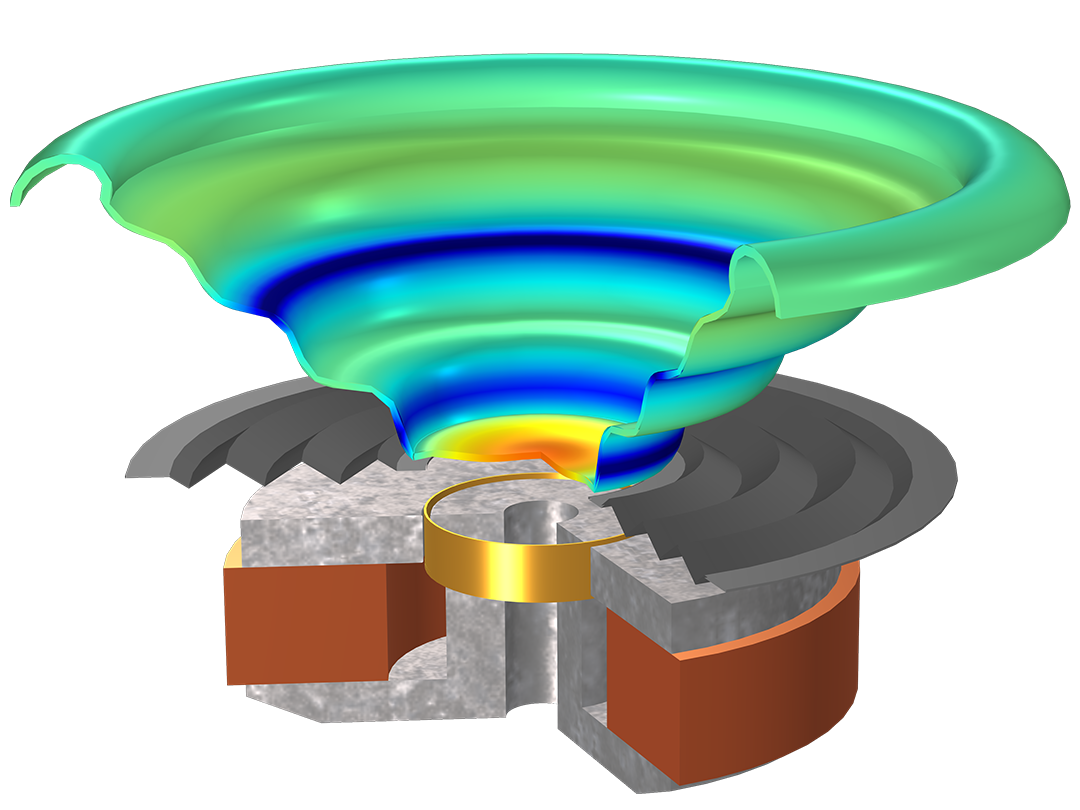
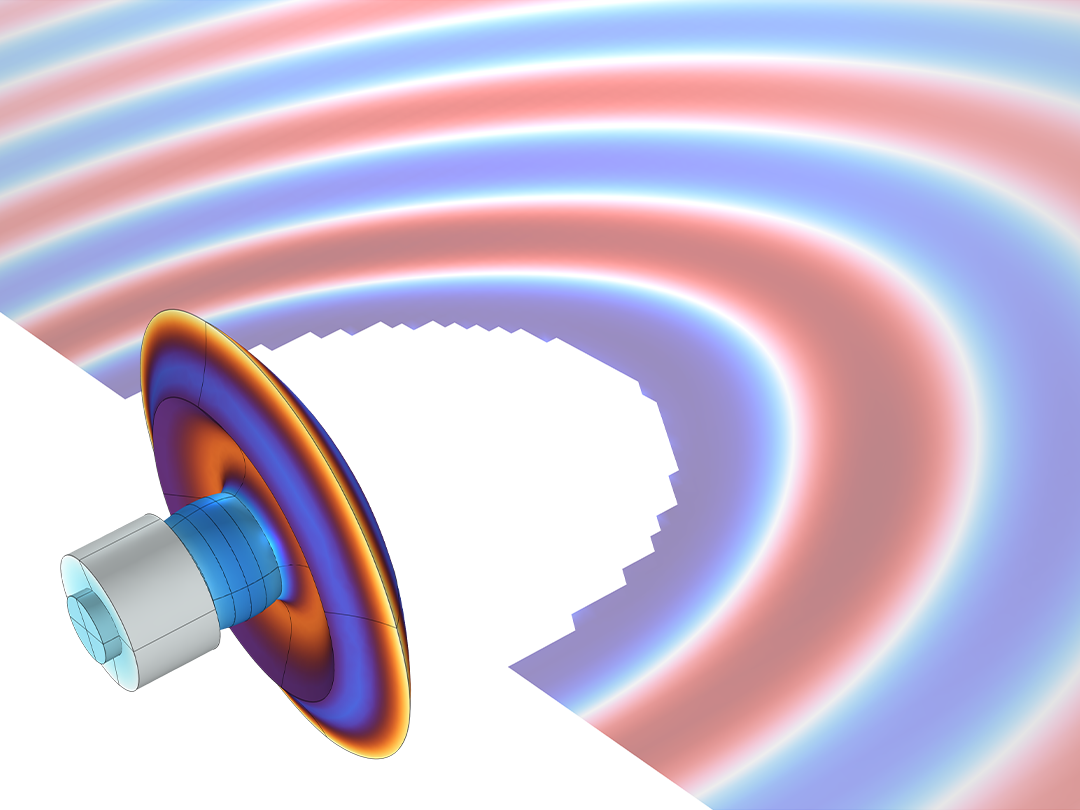
扬声器驱动器的局部放大图,其中显示位移大小。

洛伦兹力

使用电流感应的洛伦兹力作为体结构载荷来模拟电声换能器等装置。

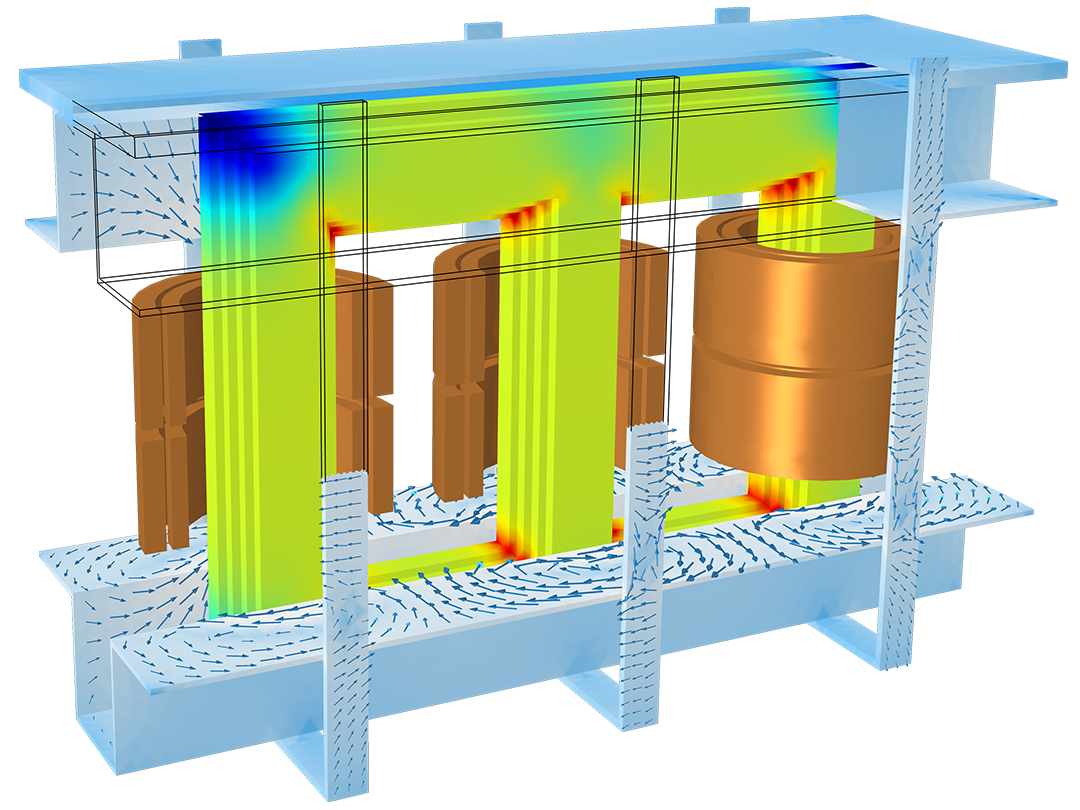
电力变压器模型,其中显示损耗分布。

磁致伸缩4

磁性材料在磁场作用下发生的形状变化,这对声呐和变压器噪声来说非常重要。

A close-up view of a tonpilz transducer showing piezoceramic rings.

Piezoelectricity1

Model piezoelectric devices, including metallic and dielectric components.

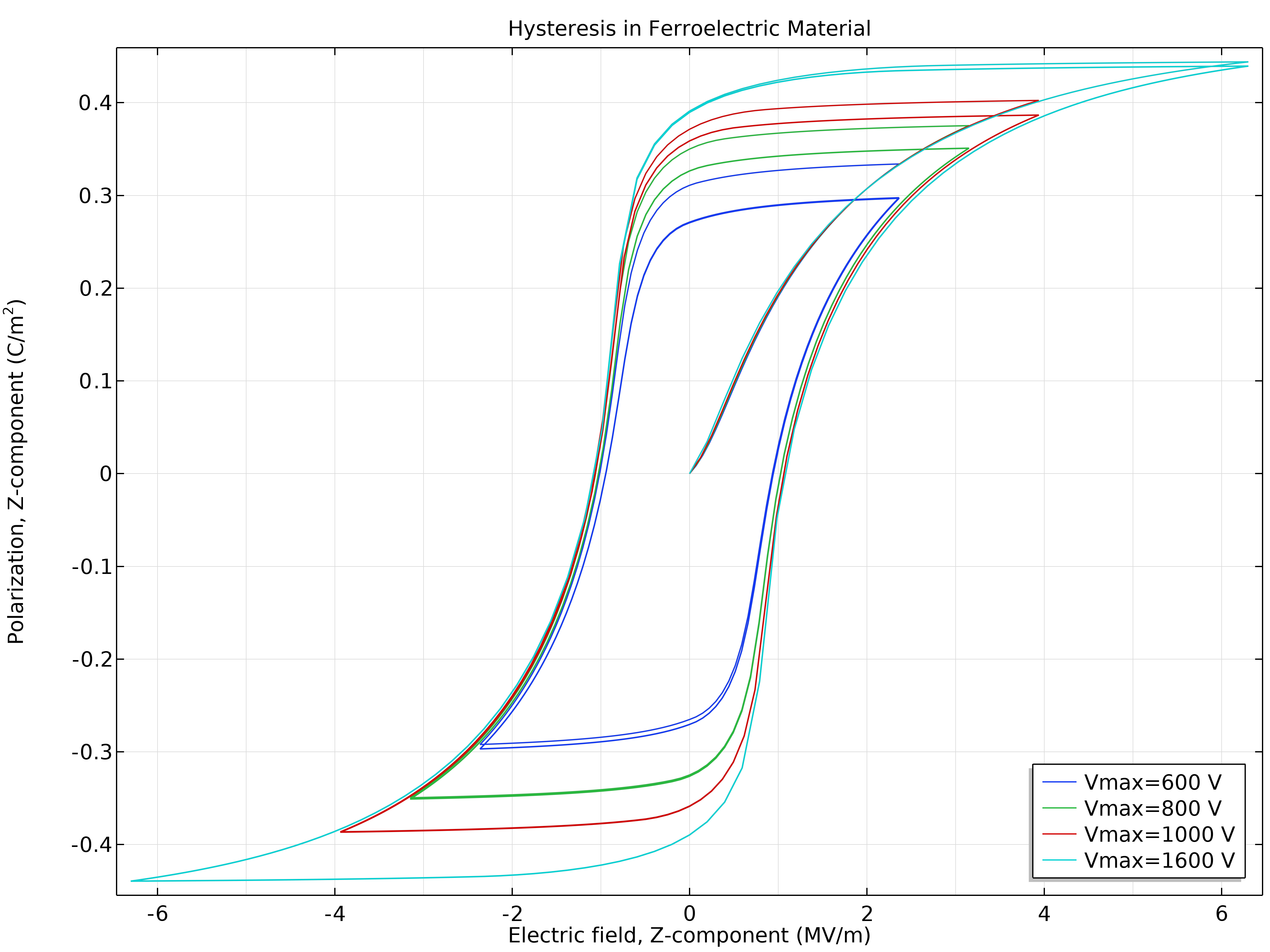
A 1D plot with electric field on the x-axis and polarization on the y-axis.

铁电

铁电功能用于模拟可能表现出磁滞特性的时变极化。

A close-up view of a magnetohydrodynamic pump showing the flow of electrically conducting fluids.

Magnetohydrodynamics

Model the interaction between electromagnetic fields and electrically conducting fluids.

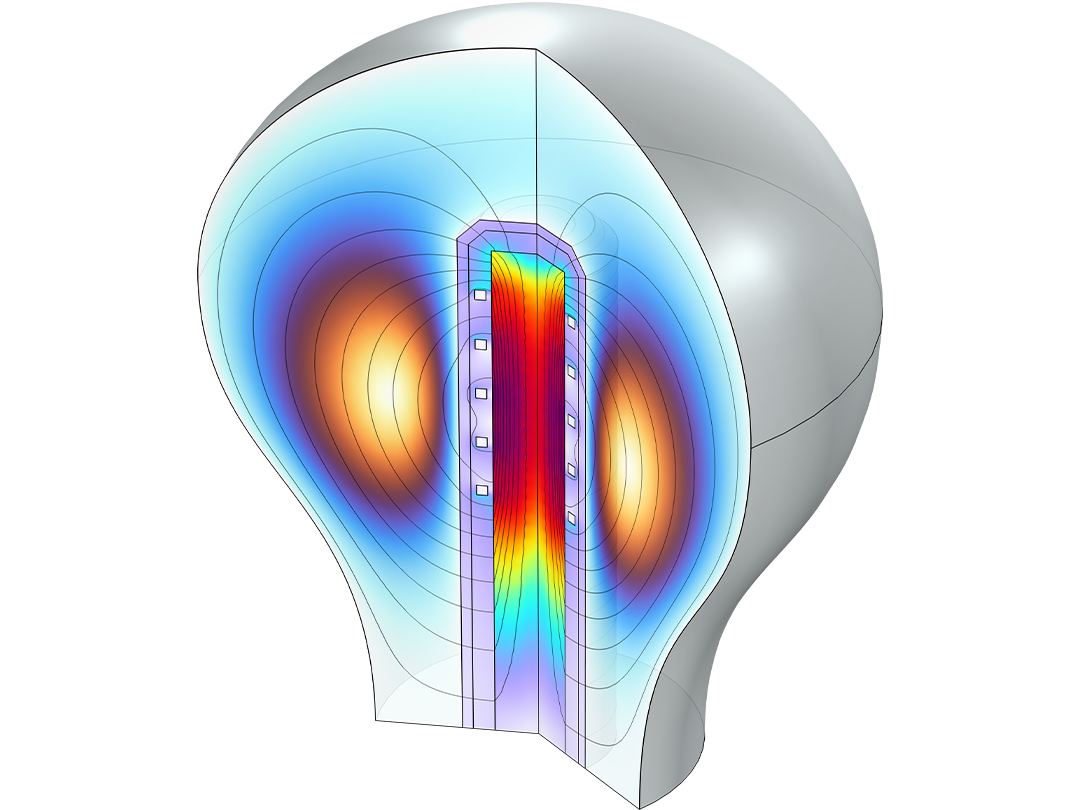
A close-up view of an electrode-less lamp model with plasma acting as the secondary winding.

电感耦合等离子体5

半导体加工中使用的电感耦合等离子体。

A close-up view of an electron beam model diverging due to its own space charge.

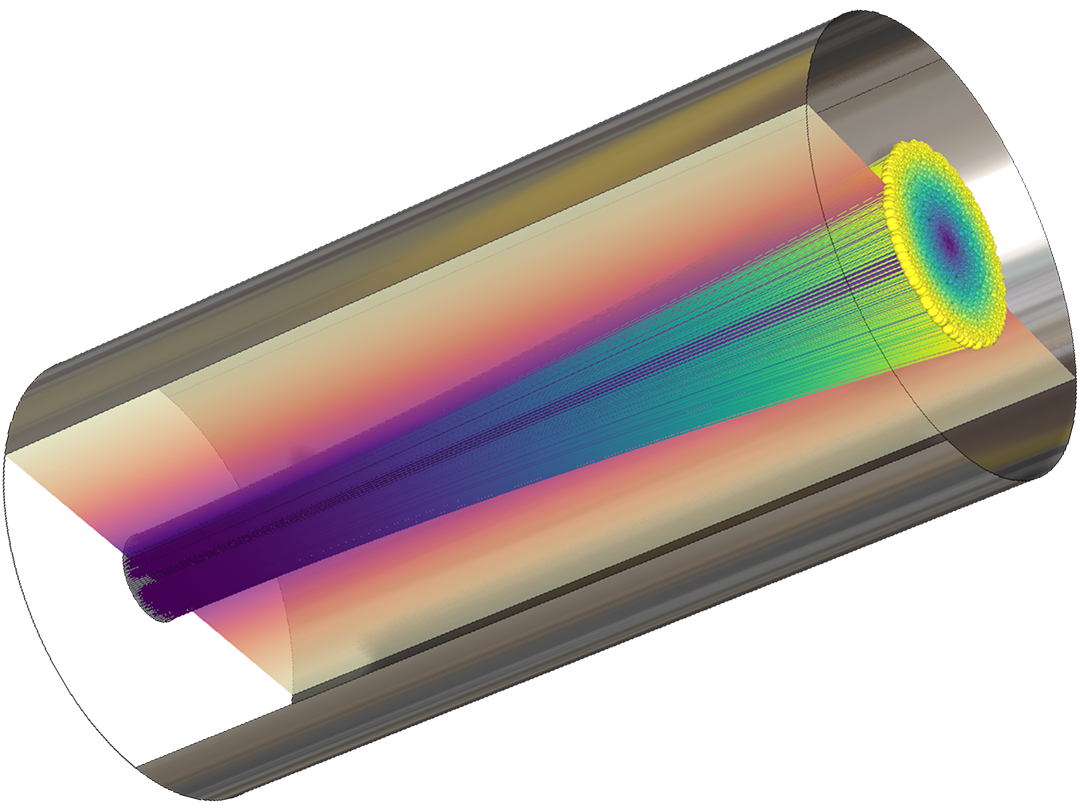
带电粒子追踪6

由电磁力引起的带电粒子或磁粒子的运动。

介电泳6

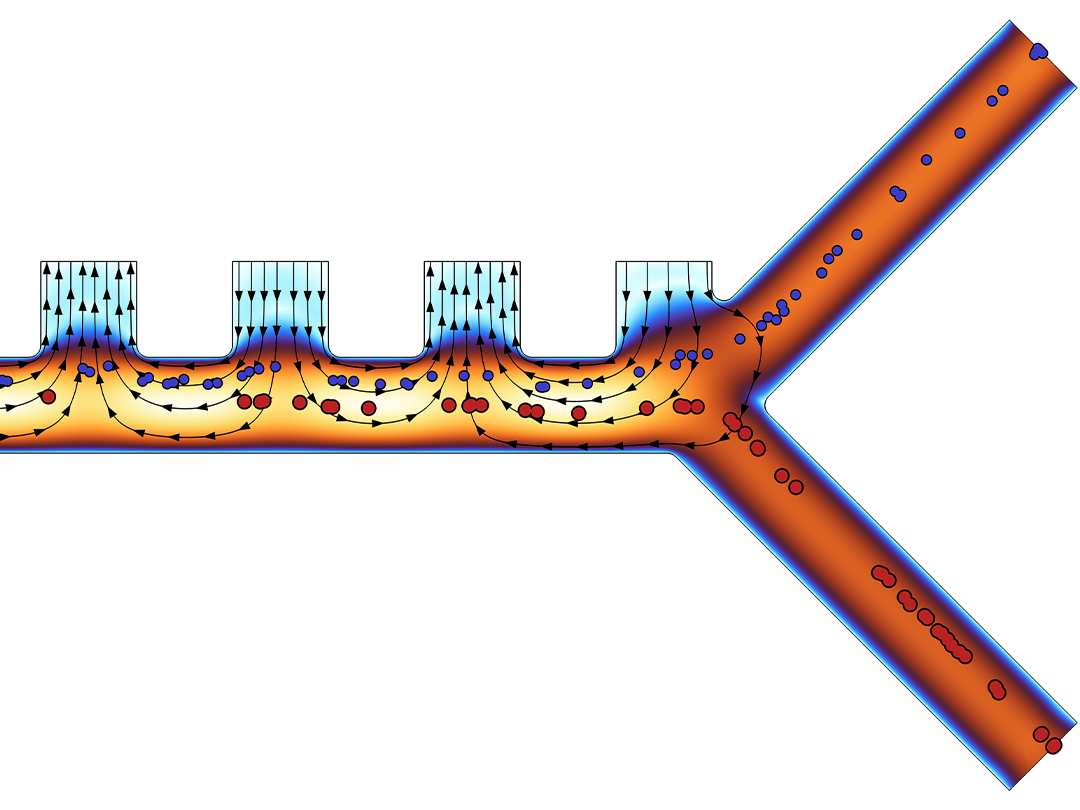
由电场梯度引起的中性颗粒的运动。

A close-up view of a loudspeaker core model with  optimized topology.

Optimization7

Combine electromagnetic analysis with parameter optimization, shape optimization, and topology optimization.

  1. 需要“AC/DC 模块”
  2. 还需要“传热模块”
  3. 还需要“MEMS 模块”或“结构力学模块”
  4. 还需要“声学模块”、“MEMS 模块”或“结构力学模块”
  5. 还需要“等离子体模块”
  6. 还需要“粒子追踪模块”

将第三方软件与 COMSOL Multiphysics® 结合使用

MATLAB® 软件用户可以使用 MATLAB® 脚本和函数轻松运行 COMSOL Multiphysics® 仿真。借助 LiveLink™ for MATLAB® 接口产品,用户可以直接在 MATLAB® 环境中访问 COMSOL® 操作,并与现有的 MATLAB® 代码结合使用。

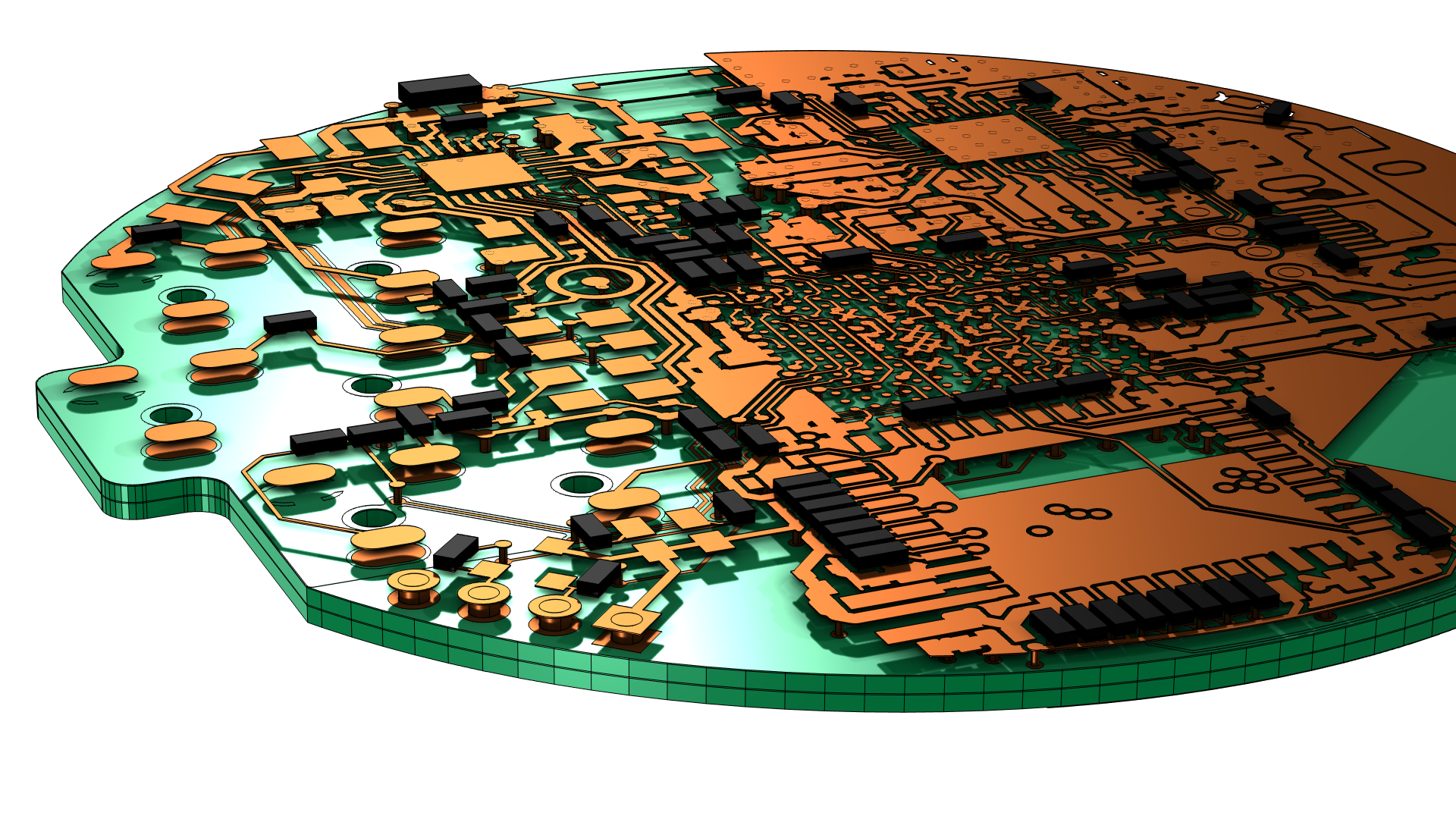
COMSOL 提供了 ECAD 导入模块CAD 导入模块设计模块以及用于衔接主流 CAD 系统的 LiveLink™ 产品,帮助用户更便捷地处理 CAD 模型和电子布局,更轻松地进行建模分析。

除此之外,通过使用 LiveLink™ for Excel® 接口产品,您还可以将 Microsoft Excel® 电子表格数据与 COMSOL Multiphysics® 环境中定义的参数进行同步,大幅提高工作效率。

COMSOL 是否能用于解决我的问题?
欢迎联系我们,我们的专业工程师可以协助您评估技术可行性,并根据使用场景推荐许可形式。

点击右侧的“联系 COMSOL”按钮,填写并提交信息,我们的工作人员将会尽快与您联系。

下一步:

评估与试用 COMSOL® 软件